- Now that a recession seems imminent, it’s important to prepare by adopting state and local tax planning techniques now.
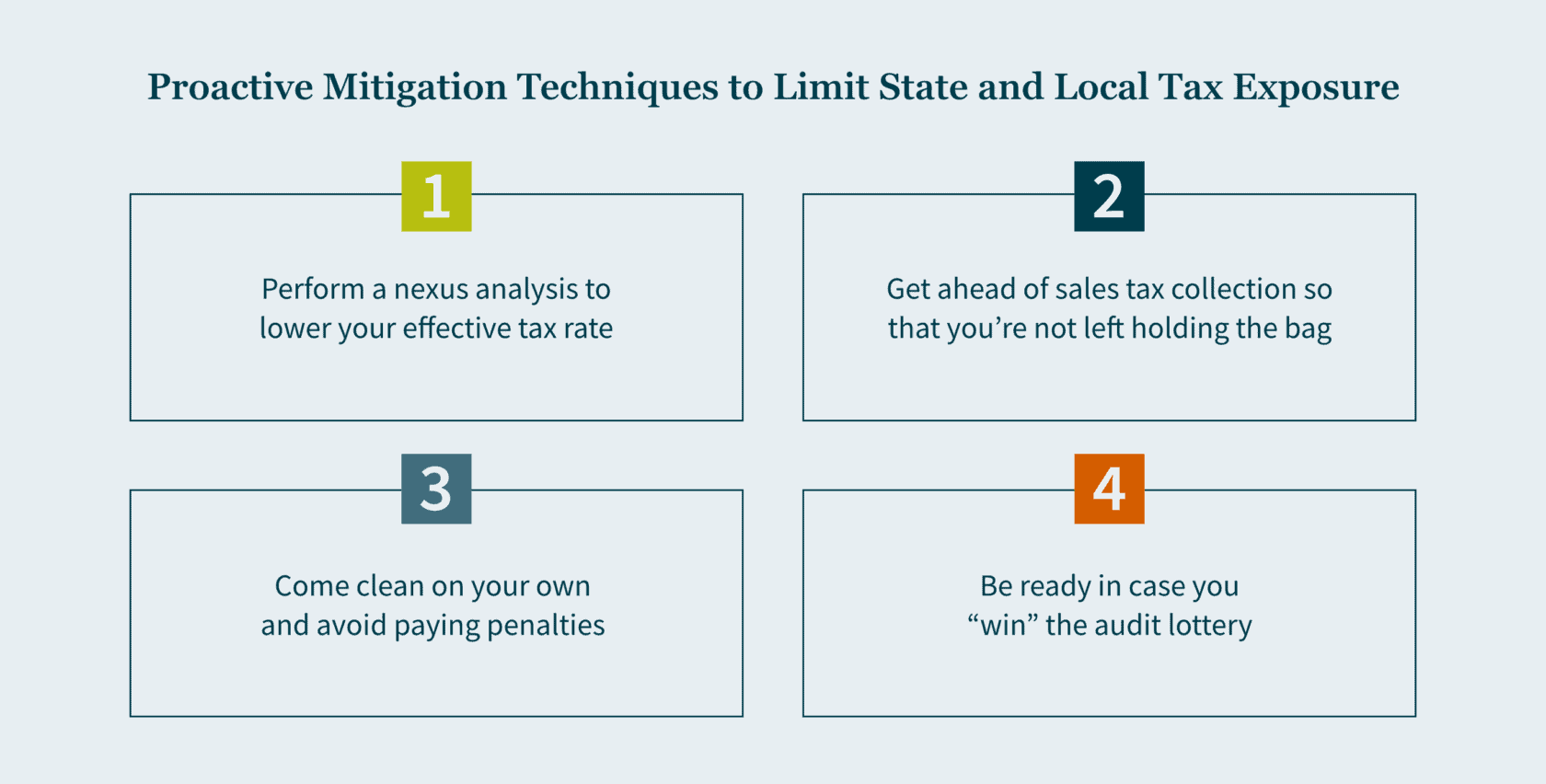
- These techniques include performing a nexus analysis to lower your effective tax rate; getting ahead of sales tax collection so that you’re not left holding the bag; coming clean on your own to avoid penalties; and being ready to win in case you “win” the audit lottery.
- Right now, you should be taking proactive measures to avoid overexposure and capitalize on opportunities that limit your overall tax burden.
Despite a seemingly robust economic recovery from the COVID-19 downturn, we are now looking down the barrel of another recession. When polled for a Wall Street Journal survey, more than three in five economists predicted a recession will occur over the next year due to a variety of reasons: inflation has hit a 40-year record high, the Fed has raised interest rates to the highest levels in more than 15 years, and several Fortune 500 companies have implemented mass layoffs. In addition, market volatility prompted by the implosion of Silicon Valley Bank and Credit Suisse has sent regulators around the globe into damage control.
While no one can predict the future — and if the COVID-19 pandemic has taught us anything, it is that the economy won’t follow the course of even the most prescient prognosticators. To prepare for the proverbial rainy day, in the following our State and Local Tax team details state and local tax planning techniques you can adopt now.
Technique #1: Perform a nexus analysis to lower your effective tax rate
Typically, a nexus analysis is performed “defensively” when you’re under the threat of an audit or to identify potential tax exposure … and that usually means an increase in state tax. But you should also consider performing a nexus analysis “offensively” as a method for lowering your effective tax rate – either by capturing net operating losses (NOLs) in states where you haven’t previously filed or by lowering apportionment in high-tax jurisdictions.
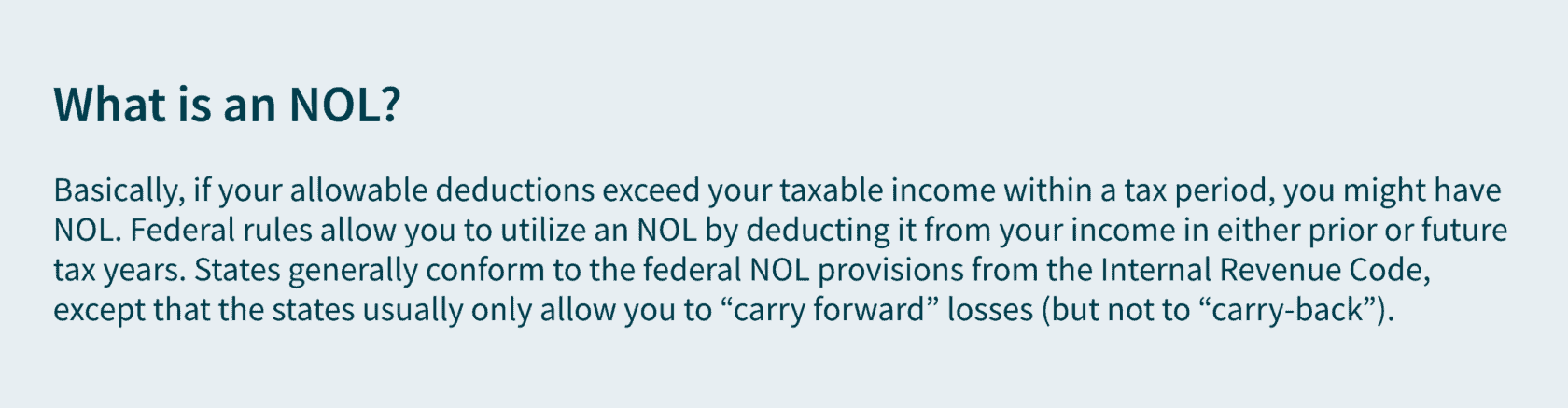
This first idea rests on the principle that you can’t claim NOL deductions on returns you never filed. If your company historically operated at a loss (for tax purposes), a nexus analysis might not have been on your radar; or maybe you had a nexus analysis done, but then decided not to file returns where there wasn’t a material exposure. But if in 2022 or later years, you were or expect to be profitable and you’ve been doing business online or in multiple states, identifying potential prior year state income or franchise tax filings may allow you to claim the benefits of the federal NOLs on your state returns by carrying the losses forward to offset current or future taxes.
Note, current federal rules allow you to carry NOLs forward indefinitely until the loss is fully recovered, but they are limited to 80% of the taxable income in any one tax period. States do not always follow these rules, and moreover, state apportionment rules will affect how much of the NOL is allocated to a given state. Therefore, you’re not likely to see a “one-to-one” application, and you may still owe some taxes, but under the right circumstances, this technique will go a long way towards mitigating exposure for state income taxes that you may owe in the future.
Another way that increasing your state tax filings may decrease your state tax liability is by taking advantage of “economic nexus” developments to “spread out” your state tax liability across jurisdictions where rates may be lower (i.e., reducing your “effective tax rate”). Many states impose “throw-back” rules that require you to treat sales to states where you don’t pay taxes as if those sales should be sourced to your home state. But if, under economic nexus, you should or could be paying tax in those jurisdictions, you may be able to reduce the payment in your home state. Similarly, differences can arise between state’s rules for sourcing sales of services or intangibles that may be particularly helpful when considering how to treat a large item of gain from a sale of a business asset (e.g., stock in a subsidiary, or a valuable piece of intellectual property).
A few example scenarios illustrate these techniques:
- SoftDev Corp. started developing a SaaS product in 2019 and then testing its prototype apps online. They have employees that work remotely from home offices in five states. While SoftDev had potential nexus due to the economic activity in several states and payroll in the other five states, they only filed in their state of corporate domicile because sales were not significant, they had losses on their federal return, and the cost to prepare the other returns exceeded their compliance budget. In 2022, SoftDev expanded its product offering and began seeing significant sales in all 50 states. For federal tax purposes, they have accrued a large NOL that will reduce taxable income for the year (and probably several years to come). It would be wise to perform a nexus analysis at this point to identify whether SoftDev can capture any NOLs in other states – the key qualification being whether there is significant apportionment in the prior years as this will drive the amount of NOL available.
- Cal Widget Co. sells widgets (tangible personal property) it manufactures in California to customers all along the west coast and all its operations, including its one warehouse, are in California. Historically, Cal Widget only files a return in California, where it has 100% apportionment because of the throwback rule, and thus pays 8.84% on all its taxable income. However, by filing in additional states, the throwback rule would not apply to those sales, and thus they wouldn’t be “thrown back” to the California numerator of the apportionment formula. Even without paying tax to the other state, if Cal Widget could show that they would have owed tax under California’s rules, but for the fact that the state does not apply tax under those circumstances, the sales could still be removed from the California numerator. For example, if 50% of sales were to California customers, 25% went to customers in Oregon (average rate = 7%), and the remaining 25% went to Washington (no corporate income tax), using this method, Cal Widget could reduce its effective state income tax rate from 8.84% to 6.17%.
- Big Apple Co. has found a buyer for its signature logo and is anticipating a major gain event in 2023, and they realize that based on prior years, they’ll be paying New York State and City tax on the entire amount of gain because it’s the only state in which they’ve ever filed state income tax returns. If they are proactive, though, they can identify multiple states in which they have received revenue and can justify filing based on “economic nexus” and “market-based” sourcing principles – this won’t change New York’s tax rate, but it will provide a reason to apportion more of the income to source outside of the state and could save significantly on their tax bill.
Oftentimes, businesses are reluctant to really dig deep into nexus issues because they’re afraid of what they might find. And they end up waiting to take action until after they receive notices or their auditors (or worse, potential buyers) start asking about uncertain tax positions and accruals. But a slow-down in business due to the recession may offer you the opportunity to catch up on these nexus issues proactively.
Technique #2: Get ahead of sales tax collection so that you’re not left holding the bag
In a perfect world, when a company is properly accounting for, collecting, and remitting sales tax, there should be no (or at least very little) effect on revenue. Sales tax shouldn’t cost the business anything – instead, the business’ customers should be economically liable for the cost, while the business itself is only responsible for reporting and remitting the tax to the appropriate tax authority.
Problems arise when the business fails to account for sales tax and then only discovers the liability after the transactions have occurred and when it is no longer feasible to collect the individual sales tax amounts from customers. Then a cost that you could have passed through to your customers becomes your cost.
If you’re not currently collecting sales tax, you might consider a few of the “red flags” below:
- Your business generates revenue online through a website, Software-as-a-Service, or another cloud-based product.
- Many states treat SaaS (and similar cloud-based products) as they would other types of software, which are generally taxable.
- What’s more, since you’re selling online, you may be subject to “economic nexus” without ever creating a physical presence in the location.
2. Your business processes payments online on behalf of other businesses making retail sales.
- Since you are the party processing the transaction, you may be required to collect sales tax as a “marketplace facilitator,” even though you’re really just a company providing services to other businesses.
3. Your business provides services, so you haven’t really been concerned about sales tax in the past because you know it generally only applies to tangible personal property (TPP) … but consider whether:
- You make some related sales of TPP when you are providing services (e.g., you design custom web infrastructure and occasionally sell specialized hardware to meet your client’s specifications);
- The services you sell are computer programming and the end-product is typically custom software;
- One division of your business is leasing goods from another division; or
- Your services are taxable because they are dependent on, or related to, sales of TPP (e.g., third party software maintenance).
You can avoid this pitfall and ultimately save money by being proactive about identifying potential sales tax requirements and implementing systems to ensure you are properly collecting the tax.
Technique #3: Come clean on your own and avoid paying penalties
If your business sells products or services in multiple states, you could face unexpected tax liabilities for failing to comply with each state’s various income, franchise, gross receipts, sales and use, property, or other taxes. You may already be aware of the issue, and maybe you even have an accrual for the liability. And compounding any such liability are the interest and penalties that could be asserted if the state eventually discovers the business activity. But you don’t have to wait for the state to come after you, and if you’re proactive, you’ll probably be able to mitigate or remove all the penalties.
Virtually every state has a Voluntary Disclosure Program, under which you can execute a voluntary disclosure agreement (VDA) between your business and the tax authority to limit your liability for back-taxes. One benefit is that the VDA will limit the “lookback” period (otherwise a state can look back as far as the business had activity); this will often reduce the potential tax liability itself. Another benefit of a VDA is that any penalties that might have applied for late filing or payment are waived (though interest usually still applies). Finally, by going through the VDA process you are put in contact with a tax authority representative who can help you to determine precisely what rules apply to the business – they won’t exactly be a “tax adviser” but sometimes simply getting a hold of someone who will address your questions is challenge. And the certainty you will get from the process will give you comfort that your tax compliance process going forward is correct.
On top of state VDA programs, many states will offer amnesty programs. They usually are only available for a brief period (e.g., six months), have similar terms to a VDA, but are more relaxed in terms of eligibility. Let’s say you’ve been filing for five years, and you stop doing business in a certain state. You receive penalties and notices, and you ignore them — you aren’t doing business there anymore. But during the recession, you need to expand back into that state for additional customers. If you want to resume your business there, an active amnesty program may allow you to set up shop without having to pay penalties on the missed filings.
With the country entering a recession, business profits are likely to decrease, and so too will state revenues; under these circumstances, state governments are more likely to offer these amnesty programs as they seek to expand the tax rolls. Be on the lookout if a VDA isn’t an option for you.
Technique #4: Be ready in case you “win” the audit lottery
Not only do state governments seek out delinquent taxpayers through amnesty and VDA programs during a recession, but they may also seek out additional tax revenue through audits. For state income taxes, we’re likely to see a surge in audits surrounding online work and remote workers because of increased popularity in remote work over the last few years. In addition, states perennially test a business’ “unitary” status (i.e., whether a given item of income should be apportioned between several states or allocated to the corporate domicile) and therefore any significant sales of business assets in the last couple of years may make you a target.
Ultimately, this is the time to be more introspective: look back on your last few years and figure out if you had any gaps in recording. If there are opportunities to capture NOLs or other additional savings, bookmark those too. It’s best to be prepared, because while there’s no guarantee you’ll be met with an audit, there’s no question that state governments increase their audit activity during a recession.
How MGO can help
A recession affects everyone, and state and local governments are no exception — which, in turn, affects you and your business. These techniques can help you prepare for whatever’s coming, ensuring you’re ready for potential audits and losses along the way. MGO’s State and Local Tax team provides experienced guidance to help you avoid overexposure and capitalize on opportunities that limit your overall tax burden.
]]>An unexpected consequence of economic downturn that started in 2008 was an increase of fraud across a wide variety of industries. As companies turned to layoffs as a way to lower overhead, many organizations unintentionally exposed themselves to potential fraud by laying-off employees who oversaw essential internal controls or served in a system of checks and balances that would have prevented fraud. According to the Association of Certified Fraud Examiners (“ACFE”), the combination of omnipresent economic pressure, and a lack of controls, resulted in historic levels of fraud following the recession. As a result, companies as large as Fortune 500 organizations, and as small as local businesses, have been forced to course correct and get a handle on fraud.
The first step toward preventing fraud is gaining a holistic view of the circumstances under which it occurs. The ACFE provided the following touchpoints to establish a baseline understanding of how fraud occurs:
- Organizations lose approximately 5% of revenue due to fraud
- Average fraud duration is 18 months
- 40% of fraud cases were detected via Tip /Hotline
- 75% of fraud cases were committed by employees working in seen departments:
– Accounting & Finance
– Purchasing
– Executive /Upper management
– Operations
– Customer Service
– Sales
How do we fight fraud?
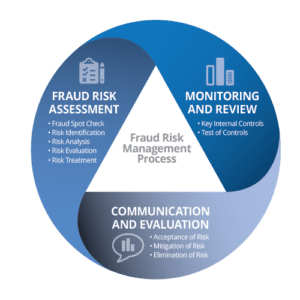
Fundamentally, business fraud prevention is a three-step process that combines reviews of operations and internal controls, the acceptance of certain conditions, and the systematic elimination of those risks.
Assessing fraud risk
The first step to preventing fraud is identifying opportunities for fraud and assessing the risk. Fraud can appear in unexpected ways. Therefore, a spot check of departments and operations is a necessary step. While following guidelines of where fraud is likely to occur (like those provided by the ACFE above) is a good way to prioritize activities, it should not limit the inquiry. The fraud assessment should be performed by employees independent of the operation or department, ideally by your in-house fraud investigation team, or internal audit department. Furthermore, collaborating with an outside subject matter expert, or Certified Fraud Examiner (“CFE”), can augment your team, providing a critical perspective for identifying fraud and developing internal procedures to eliminate fraud in the future.
Monitoring and review
An evergreen component of fraud prevention is the monitoring and review of internal controls. A sound internal control structure is the first line of defense against fraud (and a vast array of other operational hazards). Performing regularly scheduled testing, and updating controls based on the results of the testing, will create an operational structure actively working to limit opportunities for fraud.
Communication and evaluation
After the Assessment, and Monitoring stages, your organization can make final decisions based on the findings. The review function (whether performed by a CFE, internal auditor, or consultant) will present a final report on each stage of the operational review to the Internal Audit Committee, Board, or other decision-making body. The report should identify all gaps, assign risk levels, and propose solutions.
With this holistic view of operations, risks, and costs associated with fraud prevention in hand, the decision-making body can make informed decisions on the most efficient ways to shore up defenses and proactively prevent fraud.
Tips on developing internal controls
Internal Controls fall into two general categories: preventative controls and detective controls. The former are systems put in place to limit the possibility of fraud, whereas the latter can be enacted to identify and root out active, or historical, fraudulent activities. Each type of internal control requires specific knowledge of industry standards, business operations, and the culture of the organization.
Preventative controls can be the most effective, yet unheralded champions of fraud prevention, as they prevent fraud before it occurs. These can be difficult to “sell” to a governing body, as their upfront cost may not be easily balanced by definable losses saved.
Factors to consider when designing preventative controls:
- Business strategy and culture
- Utilization of IT systems
- Length of existing processes
- Consistent process outcomes
- Ability to circumvent internal controls
- Employee empowerment
Detective controls are an opportunity to identify and root out on-going or historical fraud. These controls tend to follow “after the fact” and are an attempt to “right a wrong,” when there has already been potentially significant loss. While it is always preferable to prevent fraud before the act, detective controls can produce valuable insights that can be used to prevent future fraudulent actions.
Factors to consider when designing detective controls:
- Average or expected outcomes
- Types of trends and patterns
- Unusual activity or outliers
- Review information from different directions
- Changes to defined time periods reviewed
- Utilization of IT systems
The limits of internal controls
While robust internal controls are the most effective solution to fighting fraud, there simply is no “fool-proof” system. A company must remain vigilant, responsive and adaptable to changing factors outside the limits of internal controls – factors like employee turnover and external economic pressures.
Understanding the limits of internal control structures is an important step toward developing a system that accounts for as many variable as possible. Common limits to internal controls include:
- Human judgment
- Management’s ability to override controls
- Maintaining sufficient resources to achieve adequate segregation of duties
- Breakdown of controls
- High management turnover
- Lack of employee training
- Poorly documented policies & procedures
- Internal audit plan not based on risk of operations
There is no “solution,” only steps to mitigate or uncover
Fraud is a major issue with which every organization – including public companies, growing small businesses, government institutions, or tribal entities – must actively contend. The economic downturn and the layoffs, downsizing and other negative economic outcomes that followed have created an environment where fraud is rampant, with no cessation in sight. Every organization must take a hard look at its operations, culture and internal controls to assess opportunities for fraudulent activity, and take the steps necessary to remove or limit those opportunities.
Stay tuned for future articles in this series where we will take a close look at what organizations can do to limit fraud.
]]>By Scott P. Johnson, CPA, CGMA
Partner, State & Local Government, Advisory Services
As a public official for more than 24 years, I continuously strived to implement best practices, internal controls and policies and procedures to mitigate fraud, waste and abuse. Being a municipal finance officer responsible for literally billions of dollars, there were times when I would wake up in the middle of the night thinking about what could happen or what I may not know that could be occurring that could put the organization at risk. Fortunately throughout my municipal career the organizations I served did not experience headlines due to significant fraud. We had the appropriate “tone at the top” and practiced effective measures throughout the organization to mitigate potential fraud. However, from time-to-time, we would uncover the occasional lapse of an employee’s good judgement and detect inappropriate use of government funds, such as; improper procurement credit card use for personal purposes, time cards reporting that fraudulently claimed hours worked in excess of actual hours worked, and fictitious reimbursement claims for travel.
Employee fraud is a significant problem across industries and is faced by organizations of all types, sizes, locations, and industries. While employee fraud in private organizations rarely merits a mention in the local paper, the same fraud in a government agency will have editors competing to write the splashiest headlines and garner the highest reader traffic. It is critical for such organizations to maintain a positive reputation. Reputational risk can carry long-lasting damage in monetary losses, regulatory issues, and overall risk exposure. Frankly, all types of fraud are on the rise, and municipalities need an effective fraud mitigation strategy in place to protect against reputational and monetary harm.
Just a few recent examples of municipal fraud that have had significant press coverage and put the respective organizations in a challenging position: In 2014 officials in St. Louis County, IL, uncovered a $3.4 million embezzlement that escaped detection for more than six years. According to officials, a County Health Agency Division Manager overcharged for IT computer and technical services (unbeknownst to the County, the Division Manager owned the technology company). Unfortunately, the day after the suspected embezzlement was detected by County officials, the employee committed suicide, according to the County Medical Examiner.
The largest known municipal fraud in US history was uncovered in 2012 at the City of Dixon, IL. This embezzlement scheme of almost $54 million over a 22 year period was perpetrated by its Comptroller, Rita Crundwell, who used the proceeds to finance her quarter horse ranch business and lavish lifestyle. She was convicted and pleaded guilty to the crimes and is currently serving a 20 year sentence. Another recent case of an alleged fraud allegation is currently under trial in the Los Angeles Superior Court in which ex-Pasadena city employee, Danny Wooten and co-defendants are due back in court for arraignment on April 1, 2016, according to the Los Angeles County District Attorney’s Office. The criminal case involves allegations that more than $6 million in city money was embezzled over a decade in which Wooten is suspected of creating false invoices for the underground utility program between 2004 and March 2014.
Many factors can contribute to fraud, but the key factors are the improper segregation of duties, lack of management review, maintaining undocumented procedures, common exception processing, trust without verification and validation, and lack of accountability and monitoring. Employing proper risk assessments of events that could prevent, delay, or increase the costs of achieving organizational objectives and implementing a risk management plan not only ensure compliance, but strategically safeguard on organization against fraud. There are three important steps to earning a good night’s sleep.
1. Fraud Risk Assessment – understanding the organization as a whole and individual business units will lead to the most comprehensive risk management plan. Understand how resources flow as well as internal environments and processes. Conduct interviews, make observations and review all factors. Identify the possible and probable fraud schemes for all resource flows.
2. Prevention – “Tone at the Top” is critical. Inspiring employees to follow ethical standards starts with the tone at the executive level and must trickle down through the management level and ultimately throughout the entire organization. The organization needs to know that unethical practices will not be tolerated and when detected, will be dealt with in a timely and effective manner. One measure to communicate the “tone” is writing a fraud policy in concert with the employee conduct handbook will ensure the message is designed into the orientation, onboarding, and training process. Conduct management reviews, provide whistleblower channels, and communicate often with key business unit leaders, who in turn should communicate with their staff regarding fraud prevention, detection, and correction.
3. Detection – while assessment and prevention will create a strong defense against fraud, it is still important to seek out other measures to detect fraud that may not have been included in the fraud risk assessment plan. Only three percent (3%) of all fraud is discovered by accident or the good luck of the right person in the right place. Only six percent (6%) of fraud is discovered through account reconciliation. Clearly we cannot simply rely on these detection methods. In addition to account reconciliation and keeping your ears open, creating channels for detection are of the utmost importance. Eleven percent (11%) of fraud discoveries are due to an internal audit. Return to step one by assessing and re-assessing fraud risk regularly. Conduct meaningful management reviews on-time. Twelve percent (12%) of fraud detection were the result of properly conducted management reviews. Finally, be sure to enforce an open door policy and a culture of interest in detection and reporting. Fifty-four percent (54%) of all fraud detection comes through insider tips. Ensuring there are proper procedures in place to accept these tips is paramount when designing and especially, implementing the fraud management and detection plan.
Deceitful misconduct among employees significantly damages reputations, negatively affects resources, and limits the ability of any organization to effectively serve the consumer and their community. Following this roadmap on how to respond to and prevent employee fraud will not only protect the organization and its key objectives but will lead to an easier night’s sleep – even in the face of increasing fraud across all industries.
This article is only a small representation of the material presented during MGO’s “Case in Point” presentation at the 2016 CSMFO Conference. Special recognition to Ruthe Holden, Internal Audit Manager at the City of Pasadena for her contribution to the “Case in Point” presentation. Contact Scott Johnson at sjohnson@mgocpa.com if you have any questions or comments. Comments and opinions expressed in this article are those of the authors and may not reflect the positions, opinions, or beliefs of the CSFMO or MGO and should not be construed or interpreted as such.
]]>Big earnings do not equal a lifetime of financial comfort
High tier individuals in entertainment can earn more money in a year than the average person makes in a lifetime. Yet, in a Forbes study of 165 talent agents and managers, more than nine out of ten interviewed claim a large percentage of their top tier clients have little or no understanding of wealth or how to handle that wealth for themselves.
As a result, a number of financial perils consistently trap, and occasionally ruin, a number of high-earning individuals. The media and the general public only care about the splashy, flashy tawdry spectacle of a former star down on their luck. That attention only addresses the symptoms of a disease, but never gets to the core cause that would enable a person to find a cure.
The dangers of lavish spending
Many talented individuals make the mistake of buying into media depictions of how people with status in the entertainment industry “should” live and have little or no concept of how to keep themselves financially grounded. Often there is a perception that one should not only live their lives as if they are successful, but there is pressure to show that life to the world at large, most recently through the lens of social media.
Michael Jackson is just one of many celebrities who faced bankruptcy and financial ruin late in his career. The performer had zero self-control when it came to lavish spending. His Neverland Ranch and collection of oddities are a legendary lesson in the danger of excess and paved the road to his financial ruin.
Another behavior pattern that has led to lavish spending is a general negativity attached to money, referred to as “demonized wealth.” In this case, people from a lower income bracket are suddenly thrust into a position of high wealth, and feel that being wealthy is bad, dirty, or somehow embarrassing. This could be due to how they were raised, or gained from observing the behaviors of other wealthy individuals. Demonizing one’s wealth can lead to talent spending money as soon as they earn it, in an attempt to get rid of it, instead of letting it grow.
The risks of poor investments
Many celebrities try to make smart money choices by investing in real estate, emerging companies or other investment vehicles. For every stunning success, like 50 Cent’s famous investment in Vitamin Water, there are countless stories of failed investments. While risk is part of any investment strategy, far too many celebrities over-extend themselves in pursuit of greater wealth.
Kim Basinger and Burt Reynolds, A-List movie stars at the height of their fame, ran into financial distress due to poor investments. In Basinger’s case, the actress invested in a town outside Atlanta, Georgia, intending to turn it into a tourist destination. Just five years later, on the brink of financial ruin, Basinger and the other investors sold the property at a significant loss. For Reynolds the damage of a series of costly divorces was exacerbated by a major investment in a failed restaurant chain.
In both cases, the celebrities where trying to be proactive about securing and growing their personal wealth. But poor advice and over-extending their finances led them to ruin.
Lack of experienced financial guidance
New wealth in Hollywood comes with a wide variety of financial pitfalls and traps. Some celebrities do plan ahead and seek out financial advice early in their careers, but it can often fall severely short of the depth and breadth of options that are available to them. While many are wise enough to work with a “financial advisor” all too often that source of advice is not qualified for the role, or is downright criminally-minded.
R&B singer Toni Braxton placed her financial trust in her manager and his record label only to ultimately lose everything. It is a common story, where a celebrity places financial trust in someone who is either close to them (a friend or relative) or who is a scam artist disguised as a financial advisor. Those advisors then provide poor advice that seemingly enriches everyone else at the expense of the celebrities themselves.
How can talent avoid the financial pitfalls?
We’ll be discussing this in depth in the next installment of this series of articles, but the best thing high-earning talent can do is to find themselves a brilliant financial team to work with and for them. A top tier individual in entertainment should look at the management of their wealth the same way a mid-sized company would. The person earing the income is the CEO of their own business with their name as the brand. They then need a CFO and a team of experts that are the best in their specific fields of wealth management, diversified investing, and financial planning. Proper financial planning with a team can give someone a healthy, prosperous, and well-rounded financial lifestyle; while still enabling them to plan for the future and the security that comes with smart investment moves.
]]>The financial perils celebrities face in Hollywood
A professional athlete or a top tier individual in entertainment should look at their expanded wealth and the management of that wealth the same way a mid-sized company would. The person earning the income is the CEO of the business and their name is the brand. They need a CFO to manage finances who is supported by a team of experts who are the best in their fields of wealth management, diversified investing, and financial planning. This team then enables the talent to get the best use out of their wealth while still making provisions for a comfortable future.
A good partnership between a high earning professional and a financial team can yield endless results and allow earners to live comfortably now and long into the future when considering retirement. Trust is the key to a successful working relationship between a high-income client and their financial team. With that trust established; the future of an individual and their family will be assured with strategy, planning, and more than just a bit of market savvy.
The first step in working with a professional financial team is to take ownership of financial awareness and education. It’s important that the earner takes time whether over the phone, remotely through video conference, or when possible in person; to sit and talk to their financial professionals. This will help them understand how and why their money is being managed the way it is.
A financial team needs to be allowed to act as guardians of wealth
High-earning talent must allow their financial team to act as guardians and keepers of their money. In the worlds of sports and entertainment celebrity, very few things are ever denied top-earning talent, and quite often they are not acquainted with the word “no.”
This is where financial teams step in to not only shield talent from financial predators and bad investments, but to also protect the earner’s money from themselves by helping curb extravagant spending and off-the-wall purchases. A good financial professional team is the best line of defense against money disappearing with no return.
Establish current and future goals for the life you want
A series of goals must be set by the earner and their financial professionals to properly plan for the future. Where do you want to be when you retire? What kind of life do you want to have? With the money you have coming in, what sort of plans can you make for yourself and your family? It’s important that individuals set realistic goals that are guided by their financial team, and that they maintain solid credit through their more lucrative years so they have an excellent history to build from.
Work to establish a series of sound and profitable investments
Talent can work with their financial team to establish investments that will earn returns and dividends that they can draw upon once they are no longer working. Municipal Bonds and ETFs in efficient markets are examples of smart investments. There are a multitude of options available, and if your financial team is savvy; they can advise you in the world of alternative investments like casinos, restaurants, hotels, and newer
markets like cannabis.
Get the right insurance for your career and risk profile
The financial team must work to ensure that talent has adequate insurance. Athletes take risks with their bodies all the time, so it is important that a player maintains the correct type of insurance that will cover them if they are injured and are unable to return to playing for a season. Or in a worst case scenario, they are forced into early retirement by an injury. The same can is true for actors, directors, and professionals in the world of entertainment. On-set accidents do happen, and if a person is unable to work in their chosen field; their earnings drop to next to nothing.
There is an energy and synergy to money
There is a synergy and energy to the exchange of money. Money is like an electrical current and a flow must be maintained at all times for wealth to increase in size. There needs to be a give and receive in place when balancing an individuals’ investments and wealth, and there is always the value of giving vs. receiving to consider. This journey to finding a balance with a financial team and a true vision of what a person wants to achieve with their wealth and their life is a much broader topic; which we’ll be discussing soon enough. So, just keep your eyes open for further editorials in this ongoing series!
]]>