- Agents and managers can help globally earning clients like professional athletes, musical artists, and entertainers strategically manage finances and taxes across borders to maximize earnings.
- For U.S. citizens and residents earning money abroad, key areas for advisors to address include endorsement deals, royalties, foreign properties, foreign tax returns, and tax structuring that considers foreign investments.
- For foreign (non-resident) athletes, artists, and entertainers performing in the U.S., considerations include but are not limited to U.S. taxable income, withholding rules, tax status, Central Withholding Agreements (CWA), and tax treaties.
~
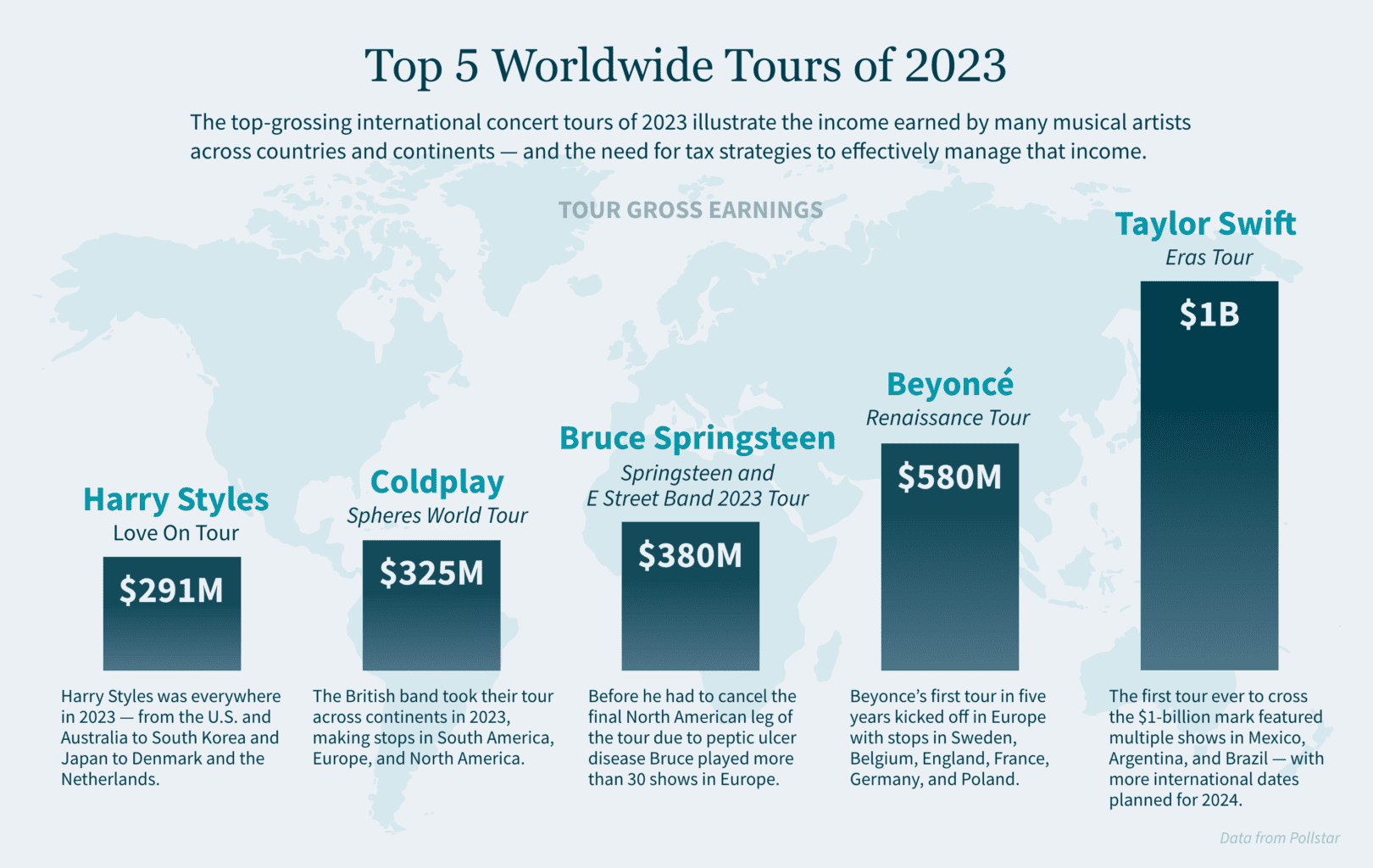
As an agent or manager for athletes, artists, and entertainers, many of your clients likely earn income across borders as they perform worldwide. Strategically managing their finances and taxes is crucial to maximize earnings. Proper planning can help reduce tax burdens and avoid double taxation across jurisdictions. This allows your clients to focus on their careers while you may finesse your assistance to them in optimizing their income with guidance from tax professionals.
Understanding key tax considerations can enable you to put frameworks in place to mitigate your clients’ liabilities. For clients who are citizens or residents of the United States earning money abroad, all worldwide income must be reported to the IRS. However, foreign countries also tax income earned by non-residents. Assessing relevant tax treaties and structuring contracts in an appropriate manner can lead to more advantageous tax treatment.
When your clients have income from various sources both from inside and outside the United States, proactive tax planning is key. Common international income types to consider include:
- Salaries from foreign leagues and tournaments
- Performance fees from concerts and festivals
- Royalties
- Endorsements and sponsorships
- Bonuses and prizes from international tournaments
- Merchandise sales
- Other income earned while playing or performing overseas
How these income types are classified and sourced impacts tax liabilities. Consulting tax professionals before your clients sign any deals allows for upfront planning that can keep more money in your clients’ pockets.
5 Key Considerations for U.S.-Based Athletes, Artists, and Entertainers Earning Income Abroad
If you are an advisor to musical artists, professional athletes, film actors, or other performers who are U.S. citizens, residents, or green card holders with foreign income sources, here are five important areas to address:
- Endorsement Deals – How will the construction of a contract impact tax treatment abroad? Will the income be considered U.S. or foreign sourced? What are some ways to proactively plan for potential tax savings?
- Royalties – Can royalties be classified differently if content is published while clients are abroad? How are royalties affected by collaborations with international artists? Is it considered U.S. income if royalties are received while playing or performing abroad?
- Foreign Properties – What are the tax rules surrounding your clients purchasing or renting homes abroad (rules may vary by country)? Did you know that foreign rental income may need to be disclosed on a U.S. tax return? How do investments in foreign countries get reported and taxed?
- Foreign Tax Returns – When is return filing required for extended stays abroad? Can foreign taxes be credited (and is the credit dollar-for-dollar)? What should be expected for payments received as a contractor versus as an employee? Which expenses are deductible in each country? For example, are agent fees, travel expenses, and entertainment deductible?
- Foreign Tax Structuring – Is it better to withhold taxes on gross revenues or after deductible expenses? How do local, state, and regional (provincial, cantonal, district, county) taxes factor in?
With these areas addressed upfront, you can maximize income and minimize overall tax burdens for your clients as opportunities arise.
5 Top Considerations for Foreign Domiciled Athletes, Artists, and Entertainers Performing or Playing in the U.S.
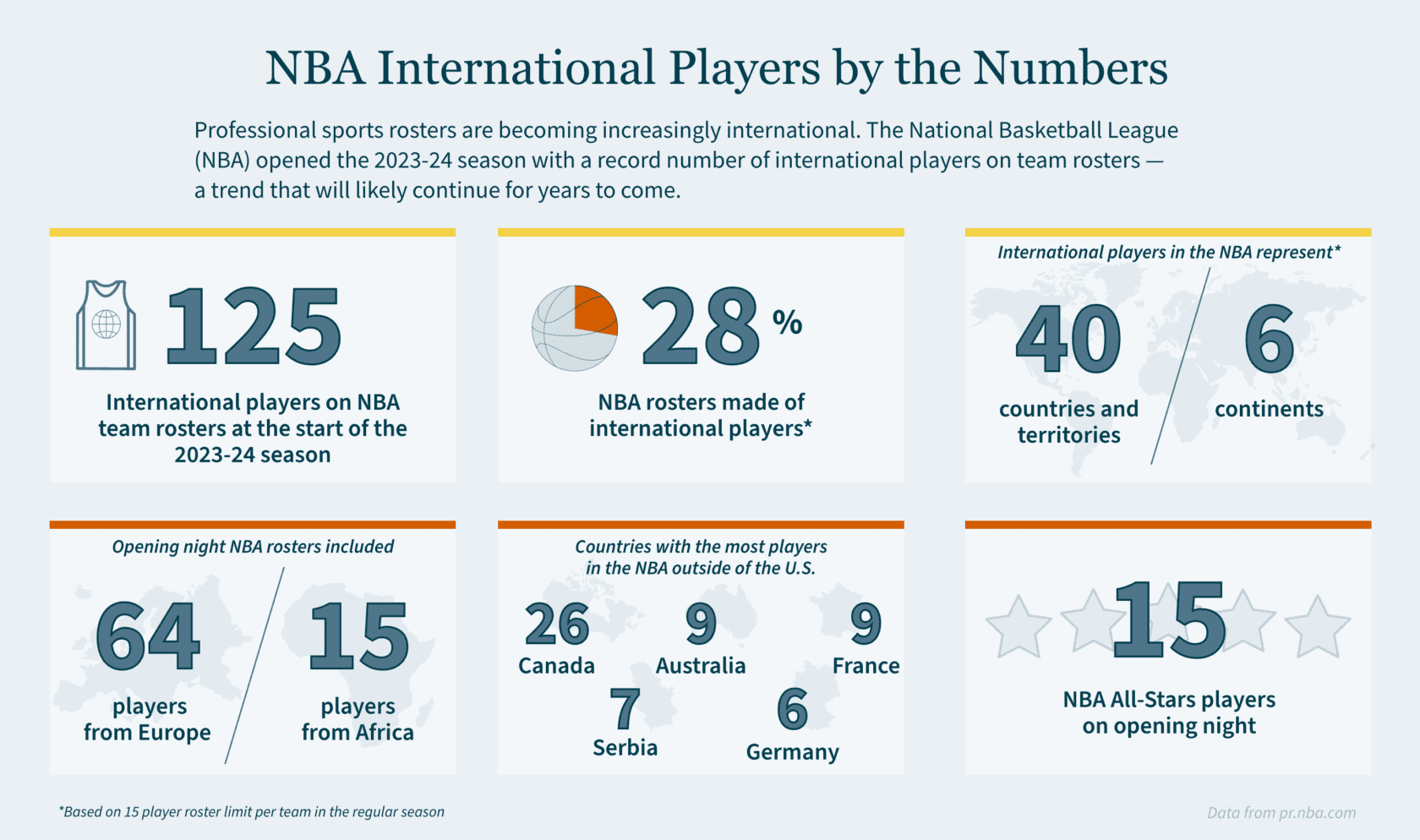
If you are an advisor to athlete, artist, and entertainer clients who are not residents or citizens of the U.S. but earn income in this country, areas that could have an impact on your clients’ taxes include (but are not limited to):
- U.S. Taxable Income – Is U.S.-sourced income taxable? What types of income may this include? Is there a requirement to file a U.S. federal income tax return? Is there an income threshold that must be met?
- Withholding Rules – What are the withholding rules surrounding payments to foreign athletes, artists, and entertainers?
- U.S. Tax Status – How is U.S. tax status determined — residency for income tax and domicile for transfer tax? How is taxation affected with or without a Social Security Number (SSN) or Individual Taxpayer Identification Number (ITIN)?
- Central Withholding Agreements (CWAs) – A CWA is a tool that can help entertainers and athletes who don’t live in the U.S. by having U.S. income tax withheld based on the non-resident’s income. Is a CWA beneficial for the individual’s situation?
- Tax Treaties – Does the individual’s home country have a tax treaty with the U.S.? How does it impact tax liabilities?
Evaluating options surrounding tax statuses, withholding approaches, and applicable treaties can mitigate liabilities and optimize tax treatment for your foreign clients.
Work with Tax Professionals to Help Your Clients Maximize Global Income
As an agent or manager navigating global income for your clients, working with experienced tax professionals is key. Advisors can assess your clients’ situations across jurisdictions to put frameworks in place reducing liabilities and avoiding double taxation. With the right global tax strategy tailored to each client, you can position them to pursue worldwide career opportunities with maximum income and minimum taxes.
Need help navigating the world of international tax for athletes, artists, and entertainers? We have experienced professionals dedicated to both international tax and entertainment, sports, and media (ESM) ready to answer all your questions. Reach out to our International Tax Team today.
]]>- The music industry has changed drastically, with artists now having more control over their careers and revenue streams beyond deals with record labels.
- Artists today need to view themselves as enterprises with diverse income opportunities including live shows, merchandising, licensing deals, streaming royalties, content creation, and catalog sales.
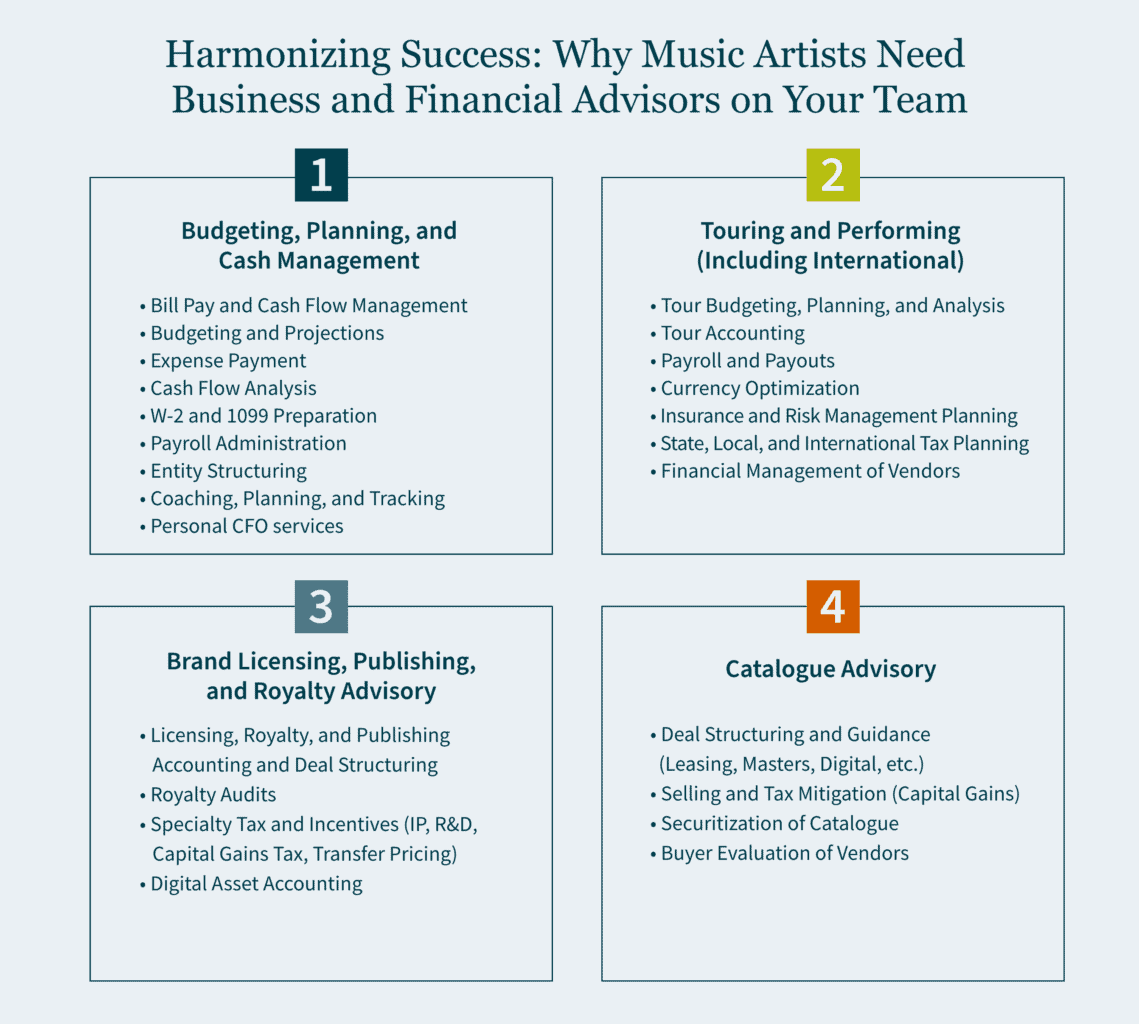
- To fully capitalize on these opportunities, artists must surround themselves with a team of expert advisors to help navigate all the financial, accounting, and business intricacies involved.
~
The journey to success in the music industry is no longer a straight line. While the path to earning substantial revenue previously only had one route — through a major label — those days are gone. The digital age has ushered in a new era, where artists have many direct pathways to their fans and an array of new revenue opportunities.
But with new opportunities comes new challenges. Today’s artists have to figure out how to navigate, manage, and optimize numerous complex revenue streams with little guidance. This is why having a trusted team of advisors is essential to ensure you are getting the most from your artistic output — both in terms of building your fan base and your financial future.
Here’s how working with a top advisor can help you transform from artist to enterprise, adept at building diverse income streams and overcoming any associated financial hurdles.
1. Live Performances: Looking Beyond the Spotlight
Live performances and touring remain pivotal for musicians to generate income. However, the financial success of a tour is not just about what you’re getting paid; it’s also about what you’re spending. That’s why meticulous planning is essential. From production costs to transportation, a trusted advisor ensures every dollar is accounted for before signing any contracts. Artists can also leverage performances for additional revenue through avenues like live streaming, behind-the-scenes access, or even concert films (i.e., Taylor Swift’s Eras Tour film). Advisors can help structure those deals to optimize the highest take-home payout.
2. Merchandising: Capitalizing on Brand Appeal
Merchandising offers a lucrative avenue to capitalize on an artist’s brand and deepen fan connections. Advisors can guide artists through various merchandising paths — from direct sales to brand collaborations to affiliations — to help them determine the best financial option. While direct sales may seem the most appealing on paper (where you might see numbers like “90% profit”), the associated responsibilities, such as sales tax management and warehousing, shipping, and staffing considerations, need careful evaluation. A seasoned advisor helps strike the right balance between profit and practicality.
3. Licensing and Sponsorships: Negotiating the Right Deal
Licensing and sponsorships have become integral to the music industry, with brands using music to sell everything from cars and sneakers to movies and fast food. Advisors play a crucial role in evaluating and negotiating these deals — ensuring you are getting fairly compensated for your name and image, and the opportunity aligns with your brand and goals. The evolving licensing landscape—with artists now able to self-publish and go through Spotify, Apple, and other platforms—has made getting licensing deals done easier. One independent artist we work with got a six-figure deal when a network went to TuneCore looking for music to use in a TV show.
4. Streaming Revenue: Making the Most of Royalties
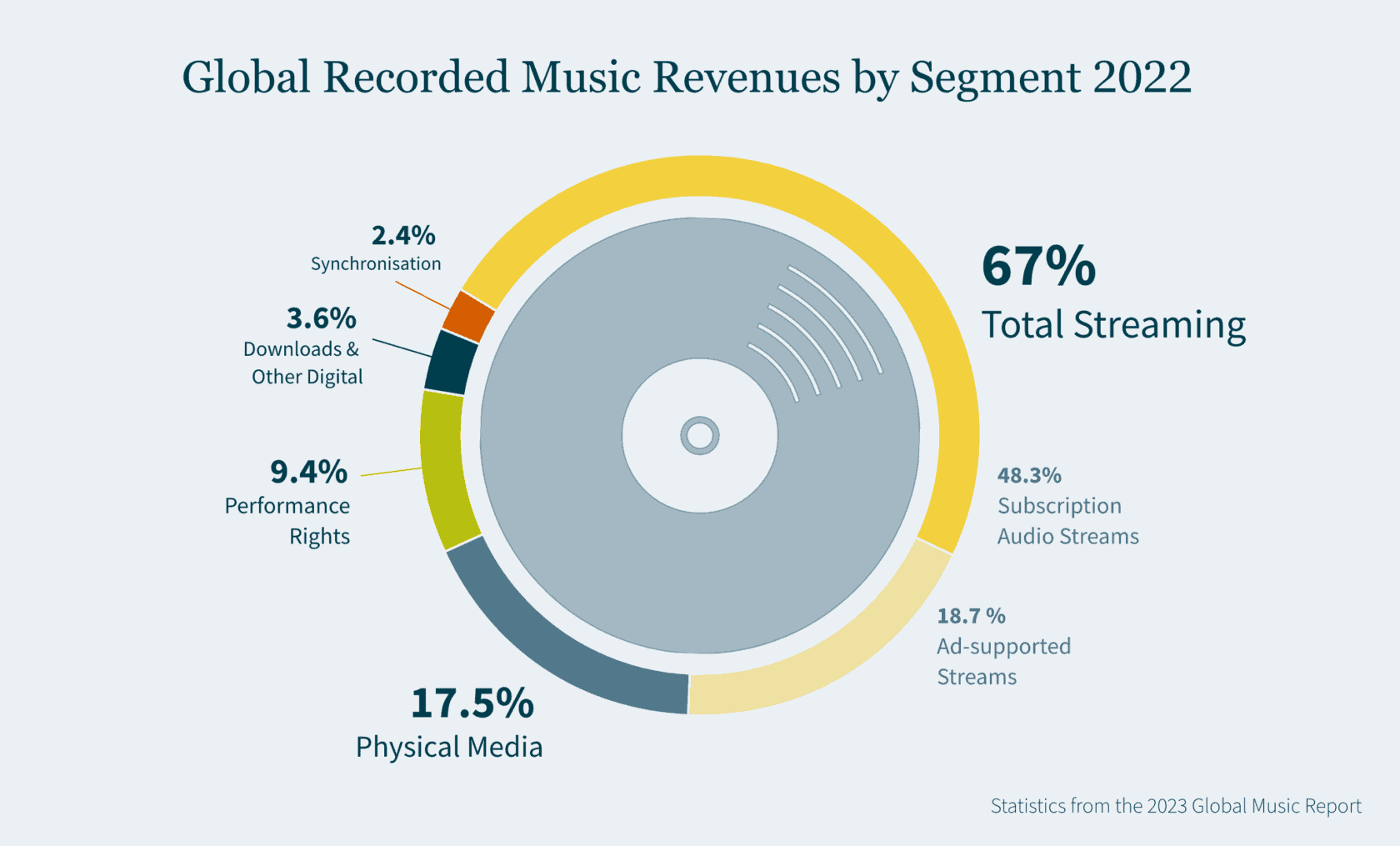
Music streaming platforms dominate the music consumption landscape today. While streaming royalties may be lower than what an artist receives from radio spins, terrestrial radio cannot touch the real-time data streaming provides (providing demographics of who is listening to your music, where they are listening, etc.). When it comes to managing streaming royalties, it pays to have a trusted advisor to track your royalties across all platforms — analyzing streaming data and royalty statements to ensure proper payment and identifying any discrepancies. Advisors also can strategize royalty planning, including estimated tax payments on royalties to avoid penalties, and help negotiate more favorable distribution deals with streaming platforms, exploring creative arrangements and exclusive partnerships.
5. Creator Content: Creating a Consistent Revenue Driver
In today’s creator economy, valued at over $100 billion, creating content is a powerful revenue stream. Many music artists are augmenting their income to the tune of six-to-nine figures a year by creating content for TikTok, YouTube, podcasts, NFTs, as well as a variety of other media and platforms. Advisors can guide you in navigating the challenges that arise from managing online content revenue — which often trickles, and then floods in, from multiple sources, and can quickly become unwieldy without a system in place to manage it. Proper financial management, including tax planning and budgeting, becomes crucial as content creation becomes a more prominent income source.
6. Catalogue Monetization: Structuring Your Ideal Sale
High-profile artists like Dr. Dre and Justin Bieber have recently sold their catalogue rights for large chunks of change. Catalogue monetization is the one time you are in complete control of your asset; you can carve out whatever deal you want (10-year, 20-year, 50%, 80%, etc.). Advisors guide artists in choosing the right partners, structuring deals, and determining the extent of the catalogue to sell. Your advisor will also help you weigh the tax considerations of collecting royalties versus selling all or some of your catalogue (royalties are taxed at 37%, while catalogue sales are taxed at 20%), and set up your sale in the most tax-efficient manner possible (for example, installment sale vs share sale). This one-time opportunity demands careful deliberation, and having the right team advising on nuances is paramount.
Building the Team Around Your Team
Moving from artist to enterprise means building a team to help you succeed. Your advisors are your team around your team. Much like a corporation brings in consultants, having seasoned business advisors available when you need them will help you make informed decisions to grow your brand and secure your financial future.
How We Can Help:
Our Entertainment, Sports, and Media (ESM) practice helps music artists at all stages, from rising stars to legends, offering financial, tax, and business management services to help you build your brand and maximize opportunities. Contact our ESM team today to learn how we can help take your music career to the next level.
- Name, image, and likeness (NIL) deals offer athletes exciting opportunities, but also potential pitfalls if not approached strategically.
- Athletes should educate themselves on taxes, carefully review contracts, and budget with long-term security in mind.
- With guidance on financial obligations, agreements, and smart money management, athletes can maximize NIL benefits while safeguarding their futures.
~
You are a talented young athlete with a growing public profile. You’ve just been offered a Name, Image, and Likeness (NIL) deal, an opportunity that can put some extra money in your pocket or even, in some cases, make a more profound impact on your financial life. It’s an exhilarating time, but it’s also crucial to approach this new chapter with the right knowledge and mindset.
Whether you’re a college or high-school athlete, or the trusted advisor to a young athlete, here are the three most critical actions you should take to avoid common financial pitfalls associated with NIL deals.
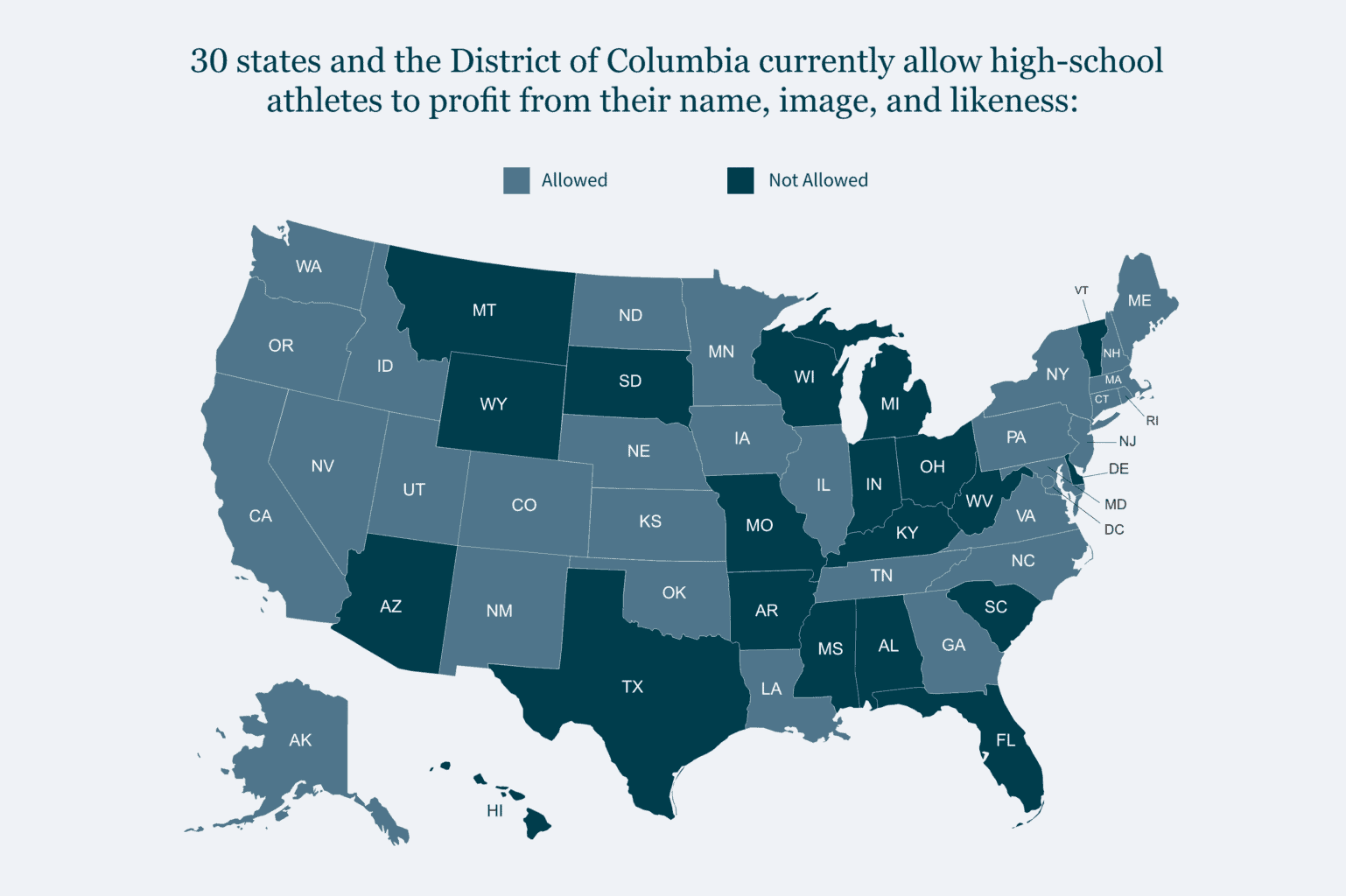
1. Recognize Your Tax Obligation
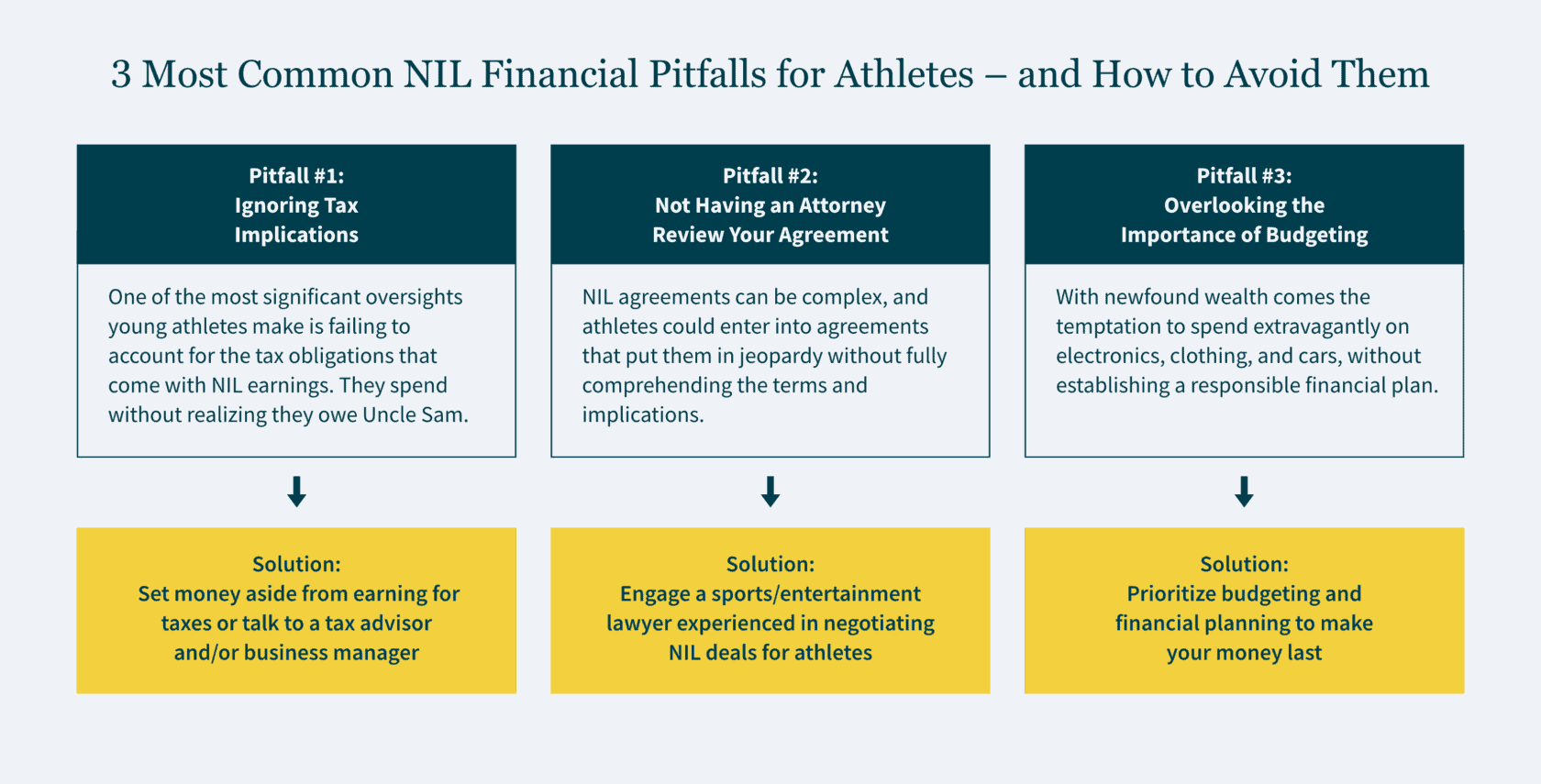
One of the first hurdles you’ll encounter in the world of NIL deals is taxes. It’s essential to understand that the money you earn from these deals is subject to taxation. Many young athletes overlook this, often because they’ve never had to deal with taxes before.
To avoid potential financial trouble down the road, consider these steps:
- Educate Yourself: Young athletes receiving payments from NIL deals are responsible for paying taxes on that income just like professional athletes. Take the time to learn about taxes, especially how they apply to your earnings. Understanding the basics of taxation will empower you to make informed decisions.
- Consult a Tax Professional: Before signing any NIL agreement, consult with an experienced accountant, tax advisor, or business manager. They can help you calculate your tax obligations, identify potential deductions, and develop a tax strategy tailored to your situation. Along with ensuring any federal, state, and local taxes you owe are paid on time (avoiding penalties), a tax professional can also help you navigate more complex situations – such as earning income across multiple states.
- Practice Smart Spending: Resist the urge to splurge on electronics, clothes, or cars as soon as the money starts rolling in. Create a budget that considers your future tax payments, living expenses, and financial goals. Staying disciplined with your spending is key to long-term financial success.
2. Execute Agreements Cautiously
Navigating NIL deals can be tricky. There are various state laws and school policies to consider, along with a number of legal “gotchas” to avoid. Here’s how you can safeguard your interests:
- Seek Legal Advice: Before signing any NIL agreement, engage a lawyer with experience negotiating NIL and brand endorsements for athletes. An attorney with expertise in sports contracts can help you navigate the important terms in an NIL deal, such as money, exclusivity, length of the agreement, how the brand can use your name, image, and likeness, and an athlete’s delivery requirements. An experienced attorney will help you spot potential pitfalls and ensure the agreement aligns with your long-term goals.
- Beware of “Standard” or Simplistic Agreements: When someone refers to a contract as “standard” or provides an overly simplified agreement, that should throw up a red flag. All it takes is the slightest language in your agreement to give a company unfettered rights to use your name, likeness and image in ways you never intended.
- Follow Regulations: An experienced advisor will help you navigate specific laws and policies set by your state, school, and the NCAA regarding NIL deals. For example, you cannot share photos or videos in your team uniform with logos from other brands without first getting permission from your school or the brands.
3. Budget Wisely for the Long Term
While newfound wealth can be exhilarating, it’s crucial to manage your finances wisely:
- Prioritize Needs Over Wants: When it comes to spending, prioritize essential needs over extravagant wants. Understand this financial windfall may be a one-time occurrence, so focus on building a secure future rather than indulging in immediate gratification.
- Future-Proof Your Earnings: Instead of assuming this is a continuous stream of income, treat each deal as if it were your last. Create a budget that accounts for potential future earnings and uncertainties, ensuring you’re prepared for any scenario.
- Explore Tax Mitigation Strategies: Consider tax mitigation strategies, such as retirement planning and deferral opportunities, to minimize your tax burden. Consulting a financial advisor can help you explore these options.
Make the Most of Your NIL Opportunities
The legalization of NIL in college and high school sports represents an exciting shift for young athletes. It can offer game-changing money, enabling you to take care of your financial needs, along with building your brand for future growth. But with great success also comes great responsibility. Even professional athletes who’ve reached the highest pinnacles of their respective sports can end up without the financial resources they need if they don’t plan ahead.
The good news is by recognizing the potential pitfalls and seeking professional guidance early in your NIL journey, you can better position yourself for long-term financial success. Remember, it’s not just about profiting from your name, image, and likeness today, but also securing your financial future for tomorrow.
How We Can Help:
Our Entertainment, Sports, and Media practice understands the unique challenges athletes face at all stages of their financial journey. Whether you need assistance with tax planning, contract negotiations, or financial strategy, we’re here to guide you toward a successful future in the world of sports and NIL deals.
This article was co-authored by Leron E. Rogers, Partner at Fox Rothschild LLP.
]]>- Whether you want to sell all or a portion of your music catalog, doing so can be very lucrative as you seek to achieve short- and long-term financial goals.
- Some factors to consider include your catalog decay, future album aspirations, and potential collaborations with other artists, as well as the fan-artist relationship.
- There is a four-step process to deciding to sell: determine the details, know your goals, be realistic, and reach out to the professionals for guidance.
Almost weekly, we’re hearing news of artists, songwriters, and producers selling all or part of the rights to their catalogs – and for big numbers:
- Justin Bieber: $200 million
- Dr. Dre: $200 million
- Stevie Nicks $100 million
- Future: $75 million
- Metro Boomin: $70 million
Some of these sales represent entire bodies of work. Others cover portions of work over a period of years and exclude high revenue-producing albums and tracks that will continue to generate wealth for years to come.
As a CPA, CGMA, and a veteran of the music industry, my Entertainment, Sports, and Media team and I can help you understand your options and determine the best way forward for you, right where you are in your career.
You may be thinking about selling all or a portion of your catalog for any number of reasons. We work with clients who have been motivated by the financial setbacks they experienced from tour cancellations due to COVID-19 restrictions, others who have new albums or tours they will be able to fund with lump sum payouts, and those who are ready to retire and enjoy the benefits of their life’s work.
The market is still good right now for investible music rights
Whether you act on it now or consider it as an option for the future, this is a good time to give it some thought and make a realistic assessment.
Radio airplay and sync licensing, as well as streaming on Spotify, Pandora, Apple Music, and other platforms, has the potential to drive significant revenue for artists. This is especially true for the top 1% who command about 90% of the revenue generated from the platforms. It is a long game for many artists who want to achieve wealth through these channels. Artist-fan relationships that can stand the test of time and drive ticket sales, merchandise sales, and album downloads have become even more critical to long-term success.
Should you sell?
At the right level, the kind of payout a catalog sale provides can be life-changing and even have a generational impact.
If you need liquidity fast, and without strings or ties to investors, selling your catalog can be a great way to get it. You can benefit from that money all at once, and from a tax standpoint, you’re going to pay a maximum tax rate of 20% on any proceeds (capital gains tax) you make from the sale. By contrast, if you keep your catalog in place and assume you’d earn revenue on all of it via streaming, you would have those assets taxed as income at a much higher rate. It can be as high as 37% based on your income level, year-after-year.
However, sync licensing, streaming popularity, and playlist rotations don’t last forever. Music and catalogs experience “catalog decay,” or the rate at which your music declines in consumption over time. Selling while the current value is up can be a wise choice. There are exceptions, as we saw last year with Kate Bush when her 80s hit “Running Up That Hill” became the most streamed song on Spotify globally, fueled by a sync licensing deal with the hot Netflix series Stranger Things. It is impossible to predict when one of those gems will hit, but in the event of a sale, the purchaser would have benefited from those royalties.
Honestly appraise where you are in your career and your album activity
Every artist is unique with a unique set of circumstances. Let’s look at the examples mentioned above:
- Dr. Dre is 58 and his sale worth $200MM+ gave him a huge influx of cash from royalties from two of his solo albums and his share of N.W.A. artist royalties, but he still has other revenue-producing assets and is currently on tour and has years of touring and album productivity ahead.
- Metro Boomin is 29 years old and has years of creative time ahead of him with $70MM from his catalog sale.
- Future is 39 years old, and with his $75MM in catalog sales of 612 songs from 2004-2020, this still leaves him with plenty of streaming revenue from smash hits and Grammy Award winners from 2021 and into the future.
- Stevie Nicks is 74 and is now $100MM wealthier from an 80% sale of her catalog in 2020. She is still actively touring, but she has wealth if she decides to slow down and still maintains 20% of her catalog for ongoing revenue.
- Justin Bieber is 29 years old but just cancelled the international leg of his tour due to his neurological health diagnosis; he now has $200MM he can count on for life and generational financial planning regardless of how he decides to, or is able to, proceed with his music career.
Evaluate how many albums and collab projects you are interested in pursuing as well as how many tours you think you have ahead of you. If you work with other artists, or crossover into different genres, you can cultivate larger audiences and grow your fanbase beyond its current limits.
If you’re considering selling your music rights, look at this four-step process:
Step 1: Determine the details.
What rights do you actually own? How much money have those rights made you in the last three years? Knowing this could help you determine how much they’d be worth if you sold them today and it will help you place a valuation on the catalog.
Who’s the potential buyer? Is this a buy and hold type of buyer? Is this a buyer who’s going to actively work your music catalog to increase its revenue, and your popularity? We know what questions to ask potential buyers to help you make the most informed decision.
Step 2: Know your personal and professional goals.
By doing this, you can balance them against the tax implications of selling by your catalog. It is your life, and you have your own personal and professional short- and long-term goals. Whether it’s sending your first-born to college or funding your next album or multi-media project independently, you have the power to use your assets in a meaningful way to enable you to attain your goals.
Step 3: Be realistic.
If you decide to sell, understand that not all catalog sales are going to yield the kind of sales that make Billboard magazine headlines. Level set your expectations with how successful you have been over the past few years, and how much you have been earning in publishing rights and streaming.
Step 4: Begin a conversation with us.
We know musicians. We know the industry. We know music. We know taxes. And we know there are options between selling versus leasing catalogs and choices between selling all or just portions of catalogs.
We’ve got you. MGO can be a steadfast partner through every step of this process to help you make the choice that is right for you and your family now, and for generations to come.
How we can help you reach your goals with catalog sales
Your music is your life — we get that. In the end, it’s one of the greatest legacies you’ll leave behind. Connect with our Entertainment, Sports, and Media practice to determine if monetizing your music catalog is the best move for you — and how it can help you reach both your professional and financial goals on a larger scale.
About the author
Tony Smalls is the leader of our Entertainment, Sports, and Media (ESM) practice and helps culture-defining entertainers, athletes, and other high-net-worth individuals build and protect their wealth while maximizing growth opportunities in today’s fast-evolving media marketplace. He specializes in accounting, finance, tax strategy, financial planning, and analysis, financial reporting, and contract/deal negotiations, working heavily on prospective investments like live music tours.
]]>At a Glance…
- A professional athlete is the CEO of the brand that bears his or her name. That’s why sports stars should turn to the strategies employed by the world’s most successful entrepreneurs and executives as a playbook for long-term success. In short, they need to think like a CEO.
- Building a high-performing team is the number-one priority for growth-oriented businesses, and it’s no different for the Athlete/CEO. Drawing from the proven team-building models of the corporate world and the entertainment industry, we’ve developed the MGO Model, tailored to the unique needs of Athlete/CEOs.
- The Business Manager is the Financial Quarterback of an Athlete/CEO’s team. He or she is responsible for the daily oversight of a client’s financial affairs. That includes tax planning and compliance, establishing budgets, paying the bills, managing cash flow, and advising on major financial decisions. The Athlete/CEO should carefully vet the qualifications of anyone serving in this critical role.
Background
In the first installment of this series, we noted that the financial profile of a professional athlete more closely resembles a mid-sized, private company than a typical household. While the economics can be exceptional, an alarming number of players lack the support structure necessary to navigate the depth and complexity of their financial requirements.
A professional athlete is the CEO of the brand that bears his or her name. To ensure the long-term value of that brand, the Athlete/CEO needs to embrace that role and reimagine their future beyond the playing field. In this series, we examine the mindsets and practices of some of the world’s most effective business leaders as a model for navigating the unique challenges and opportunities facing professional athletes.

Building a Team
John Wooden said, “The main ingredient to stardom is the rest of the team.” This is just as true in the business world as it is in the world of professional sports. That’s why the world’s top CEOs make team-building their first priority. The way they approach that process serves as a valuable roadmap for Athlete/CEOs.
The Corporate Model
Most businesses share a common structural framework. While details may vary across different industries and global regions, the core elements of the Corporate Model (below) remain consistent. This framework identifies the primary business functions and areas of expertise critical to an organization’s success.
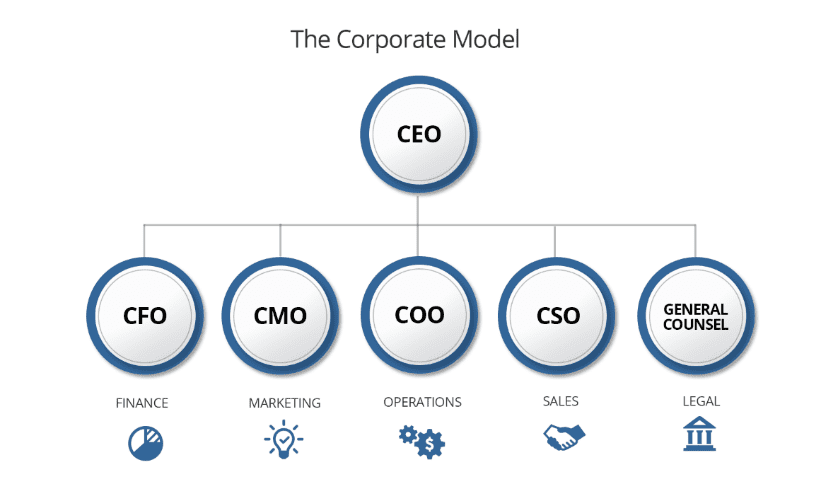
The Corporate Model has been successfully adapted to a wide variety of business categories, evolving as necessary to the unique needs of each organization’s operating environment. When working with athletes, perhaps the most relevant example is the entertainment industry.
The Hollywood Model
The Film & Television industry shares many of the traits of people working in professional sports. The quality of the product is determined largely by the quality of the talent in the spotlight – driving significant demand and high salaries for the best actors, directors, writers, etc. Over the years, Hollywood leaders recognized that many of the same principles of growth and financial governance in the corporate world apply to the financial lives of talent in Film & Television. This led to the evolution of what we call the Hollywood Model (shown below).

This model identifies the importance of each individual role in the Corporate Model, albeit by different names. For example, the Business Manager takes on the role of the Chief Financial Officer (CFO), serving as the quarterback of the client’s financial affairs.
The Sports Model
Over the past several decades, the financial lives of professional athletes have grown increasingly complex. Salaries have grown significantly, as have endorsements, appearances, other sources of income, and the demands on each player’s time and attention. However, the average player’s support system has failed to evolve at the same pace. The model below shows how the support team of a typical athlete compares to Corporate Model.
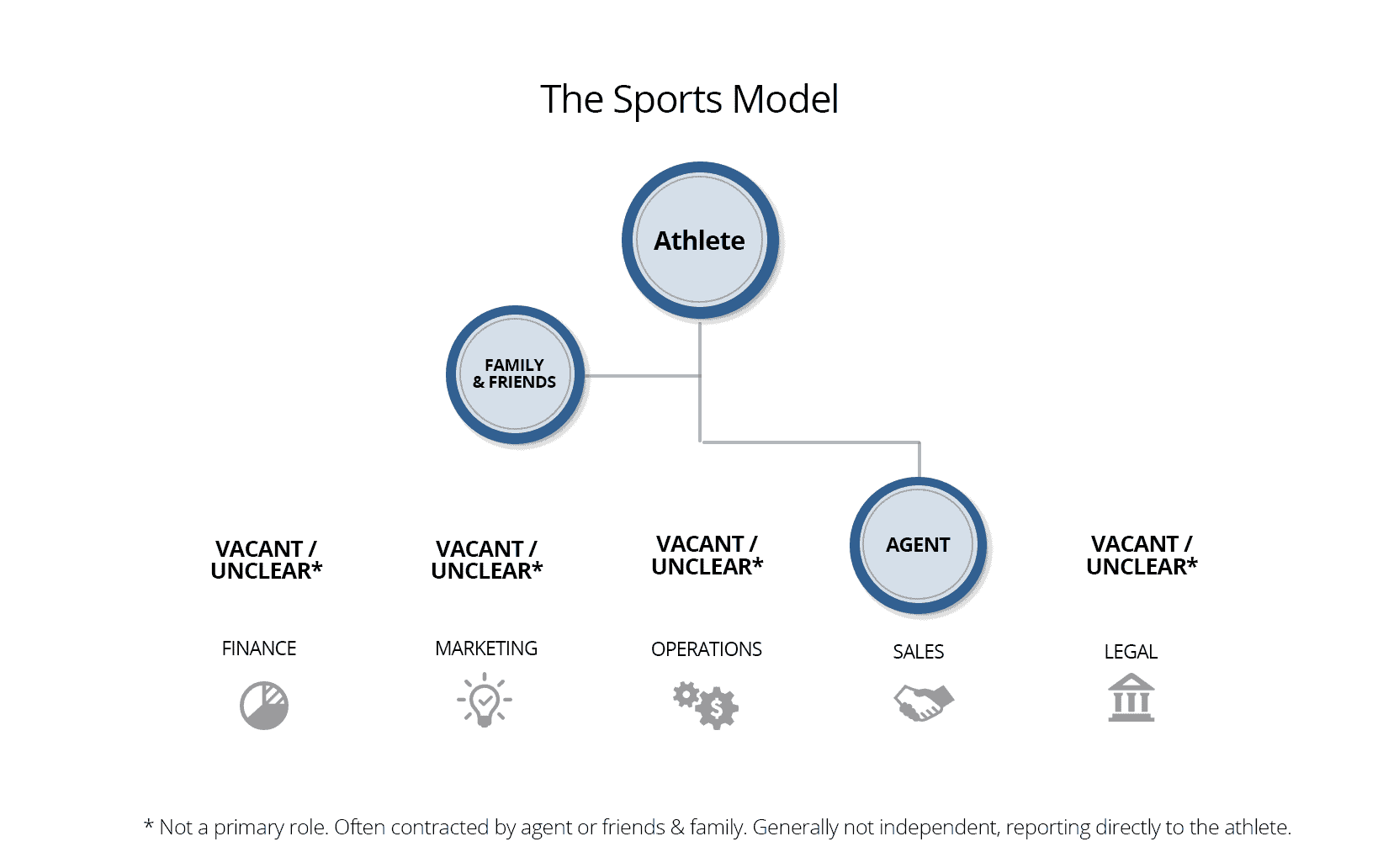
While professional athletes understand the importance of experience, expertise, and teamwork, they often lack a clearly defined model for building their own teams off-the-field. The majority of highly publicized financial failures in professional sports stem from athletes who were either (a) missing key role players on their teams, or (b) trusting important roles to inexperienced or sometimes even unscrupulous acquaintances.
The MGO Model
At MGO, we’ve been fortunate to work with some of the most successful executives and entrepreneurs in the world – as well as many of the biggest names in Sports & Entertainment. As a result, we’ve come to know the traits and practices that drive success across industries.
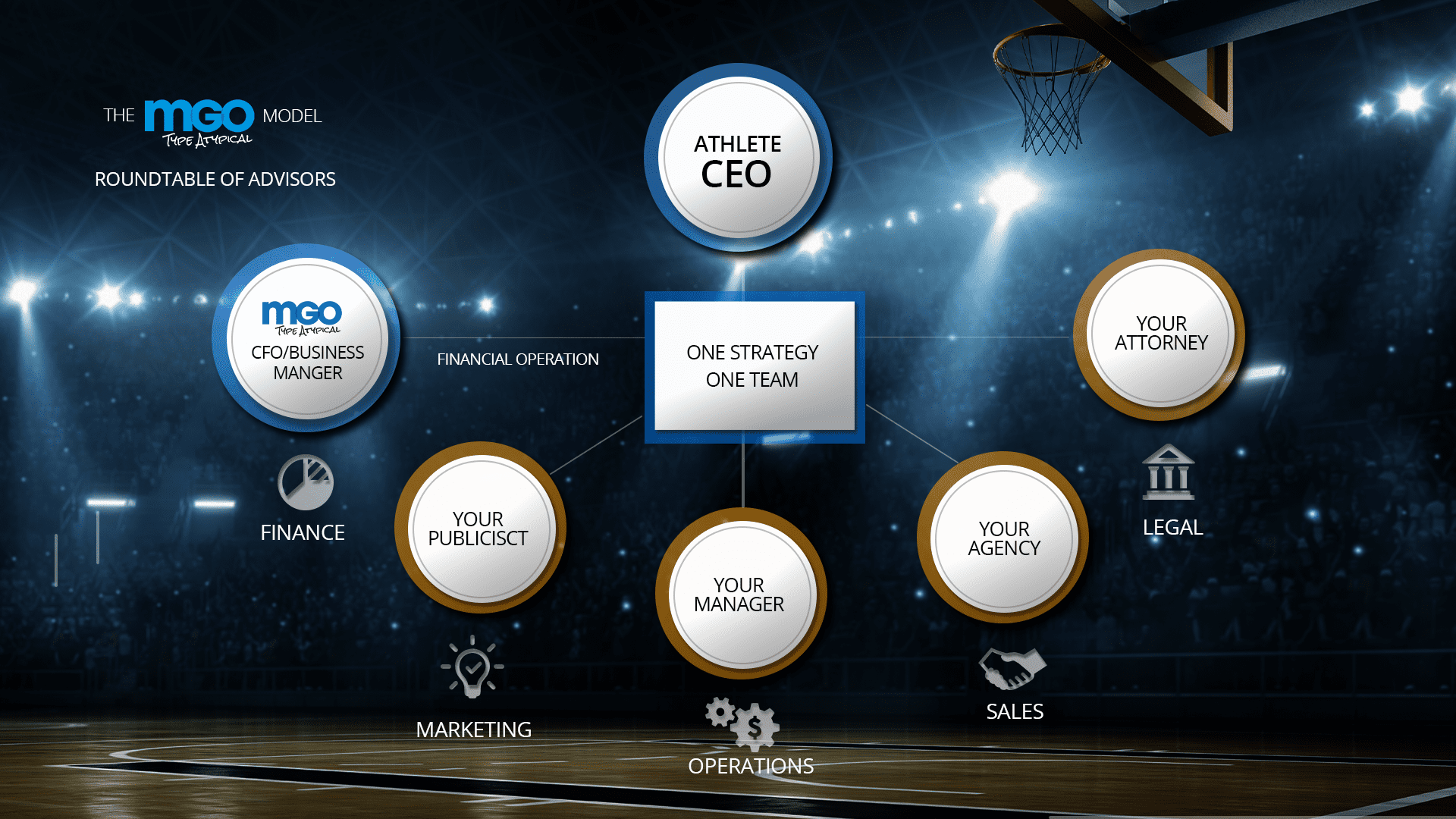
The MGO Sports Model was developed to be a blueprint for Athlete/CEOs as they build their own teams. It identifies and defines the roles that are critical to success, while aligning the work of leading advisors under a common vision. While each role is important, we encourage clients to begin with the person who will serve as the quarterback of their daily financial lives; the CFO Business Manager.
The Financial Quarterback
In a recent article, Variety described the role of Business Managers in the Sports & Entertainment industry, stating, “Business Managers are the personal CFOs for celebrities, executives and athletes… They put their fortunes and their day-to-day lives in the hands of these trusted advisors.”
While each member of the Athlete/CEO’s team plays a vital role, the CFO/Business Manager is the person with the most tangible daily impact on a client’s financial life. He or she is the quarterback of the financial operation – responsible for hands-on, real-time execution of the financial plan. This includes establishing budgets paying the bills and monitoring the expenditures of anyone with access to the client’s accounts or credit cards.
Additionally, Business Managers serve as on-call financial advisors, working closely with clients on many of their most important financial decisions including family estates and trusts, tax planning, major purchases, potential investments, and charitable contributions.
High profile athletes are sometimes targets of investment scams and unwarranted requests for financial support. When these propositions come from friends, family and former acquaintances, a Business Manager can provide an important gatekeeper function. By establishing a recognized first point-of-contact for all financial requests, the majority of questionable requests can be filtered out before reaching the athlete.
Finally, the CFO/Business Manager works closely with the entire roundtable of advisors, ensuring that everyone is aligned and working together to implement a common strategy.
Selecting a CFO/Business Manager
Despite the critical role played by Business Managers in the financial lives of their clients, most states require no credentials to use the title Business Manager. As a result, there are people with little or no accounting experience using that title today.

Many of the highly publicized financial challenges in Sports & Entertainment have stemmed from unqualified and/or unethical advisors serving in the role of Business Manager for high profile clients. That’s why we suggest doing your own due diligence before hiring the quarterback of your financial team.
Questions? Let’s Talk.
]]>Almost ten years ago, ESPN aired its groundbreaking 30 for 30 Series, opening with this pair of startling statistics:
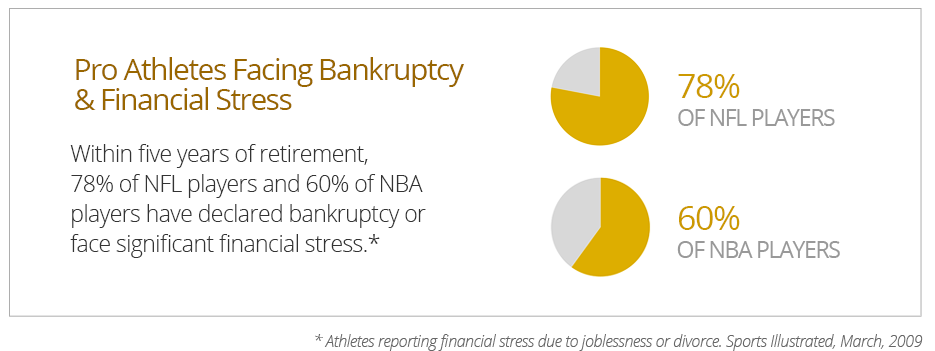
Since that time, dozens of media reports have presented similar statistics, suggesting a widespread problem in professional sports that continues to impact athletes in alarming numbers. These reports often focus on the more sensational aspects of the problem: extravagant spending; fraudulent investments; and embezzlement by friends, family, and advisors. In addition to these potential threats, players have to navigate a myriad of other demands including taxes; contracts; merchandising and endorsement opportunities; investment opportunities; and team obligations – all competing for mental energy, time, attention and/or financial support.
Part of the challenge for athletes is a lack of, or gap in their education on the fundamentals of money. That gap becomes more significant due to the complexity of a professional athlete’s financial interests – which more closely resemble a mid-sized, privately held company than a typical household. Additionally, a professional athlete is the CEO of the brand that shares his/her name. To ensure long-term financial success, today’s sports star needs to adopt the mindset of a CEO.

The CEO Mindset: A Framework for Success
The CEO is the most powerful and sought-after title in business. Like the world of pro sports, very few of the people who aspire to the role ever make it – even fewer rise to the ranks of the elite performers. The job is as rewarding as it is challenging. Unfortunately, very little has been written on what makes a CEO successful.
At MGO, we’ve been fortunate to work closely with some of the most successful executives and entrepreneurs in the world. As a result, we’ve come to know the traits and practices that successful leaders have in common – and applied them to the situations most commonly faced by professional athletes or “Athlete/CEOs.”
The CEO mindset is built around a framework with four pillars:

I. Vision & Strategy
Athletes understand the power of visualization – the importance of envisioning an outcome in order to make it a reality. In their role as Athlete/CEO, they are asked to extend the horizon of their vision. To ideate their life goals and aspirations – today and into the future. To build a roadmap that will get them there.
II. Team Building & Alignment
Athletes understand that the single most important requirement for winning is the team: quality talent, clarity of mission, alignment, and execution. The team must understand the critical balance between individual talent and working together as a single holistic, high-functioning unit. The foundation of all high-functioning teams is trust.
III. CEO Focus
Athlete/CEOs face overwhelming demands for their time and must be careful to avoid other people’s urgent, but often unimportant, demands for their attention. Top-performing CEOs understand how to focus on the important things that only they can do. Whether it’s leading critical meetings, inspiring team action, or telling the story behind your vision – the Athlete/CEO must be vigilant with how they invest their time.

IV. Larger Purpose
Exceptional CEOs understand the power of purpose. Something that goes beyond just profits and financial rewards. Athlete/CEOs occupy a unique place in the world. They wield visibility and influence that most of us can only imagine. It gives them the ability to inspire others and make an impact on the world in a way few can. Lock-in to that larger purpose and make sure it’s top of mind in driving your key decisions.
CONCLUSION
John Wooden said, “The main ingredient to stardom is the rest of the team.” At MGO, we team with athletes and entertainers to achieve long-term financial success and help them think like a CEO. We are your experienced ally, financial coach, and trusted advisor.
We use a proven framework that starts with developing your vision and strategy, supported by a team that can get you there. In Part 2 of this series, we’ll discuss the keys to building a high-performing team, including:
- Common mistakes made by professional athletes when building a team
- What Athlete/CEOs can learn from the Corporate Model of team building
- How to ensure the entire team is aligned and moving in the same direction
COMING SOON:
Part 2: Building Your Team
Sign-up to receive the complete series >