We sat down with Tony to ask him some questions about his journey from pre-law student to a leader who excels at crafting relationships that last:
What inspired you to pursue a career in accounting?
My journey into accounting started off as pre-law. Business and entrepreneurship always had a place in my spirit! I remember sitting in my elective business course freshman year, debating with my classmates about which career path had the most available jobs. We looked at the classified ads and saw that the number of jobs for accountants was significantly higher than for attorneys, and that sparked my interest!
What is a key milestone in your career that you are particularly proud of?
One of the most significant milestones in my career was managing and guiding the business affairs of a very successful entertainer. This experience was unmatched. I had to understand accounting, investments, marketing, management, negotiations, and contracts all at the same time. Actors, musicians, and athletes are full-blown enterprises, and there’s no manual for how to help them grow their net worth — each person is unique in their desires, goals, and timing.
What resources that you have found helpful in your career would you recommend to others?
Networking is key. And I don’t just mean meeting people. I mean, taking the time to understand the person or people you’re engaging with. Really understand what they do, how they do it, their challenges, their successes. Our careers become a series of experiences, and you find that there’s common ground between your journey and others’ . Finding it can help deepen your relationships.
Who has been your greatest source of inspiration in your career?
One of my greatest sources of inspiration is still one of my closest friends and mentors today: Mr. Avery Munnings, who was one of the first African American partners at a Big 4 firm in the Atlanta area. When I was a first year, he told me that when I’m going through the audit programs and asking questions of seasoned executives at large and small companies alike, to seek the answers as if I’m going to use the information in my own company one day. That was a spark to my thinking and approach to problem-solving.
What advice would you give to those just starting out in the field?
Network closely with your colleagues in every department and level. We spend so much of our daily lives in the workplace, and building great internal relationships can improve our overall wellbeing and sense of where we fit in. Not only does it teach us about ourselves, but it also helps us understand each other’s strengths and opportunities, maximizing our work experiences.
Lonnie was kind enough to share his reflections on a variety of topics — from why he chose accounting to the need for diversity in recruitment to the importance of pursuing your passions:
Entering accounting
I became an Enrolled Agent because I wanted to be able to challenge IRS positions and represent the taxpayers. It’s taught me tax ethics, as well as given me the confidence to solve my clients’ greatest tax problems.
Seeing the big picture
My first job in engineering was in the cost estimating department for an architect engineering firm specializing in power plant construction, and I flirted with becoming a cost engineer, using my accounting knowledge to help develop budgets and monitor construction spending. This taught me to learn how to pay attention to detail — but also how to look at the big picture.
Embracing change
Be able to embrace change and be open to new beginnings. View the initial frustration with beginning again as an opportunity for growth. Sometimes, you’ve got to take a step back in order to go forward. Accounting — especially taxation — is a great field if you like to help people. There’s great joy in saving someone money or developing a strategy to reduce taxes.
Continually learning
In our profession, we have the endless opportunity to learn something new. The laws frequently change, and new laws are enacted, so you have to stay up to date with what you’ve learned.
Diversity in accounting
Colleges must do a better job recruiting accounting majors of all types, seeking diversity in ethnicity, nationality, gender, age…we know accounting doesn’t have the ‘sexy’ perception of other business majors, but it’s equally rewarding.
Pursuing your passion
If I were able to give my younger self some advice, it would be to take the plunge sooner. Never be afraid to pursue your passion.
Here is a brief Q&A with Marlon about how he came to accounting, and what tips and advice he would share with others:
What inspired you to pursue a career in accounting?
I’ve always been interested and good with numbers. In the summer of 1979, my cousin and I decided to develop a mobile juice stand. I started calculating that our profits would be better if we used the orange drink from McDonalds instead of orange juice, as our cost of goods sold would be less.
What key milestones in your accounting career are you particularly proud of?
One of the proudest moments in my career is becoming the first Black Partner at Weaver. We used to joke I was the first Canadian Partner too.
What tips have you found particularly helpful in your career that you would recommend to others?
Find your niche — something that you enjoy doing. Early in my career, I realized I’m not the greatest writer. But I had a fascination with computers and how they could be used to make our lives better. So I leveraged this interest to utilize the tool throughout my career as technology has changed.
What career advice would you give to your younger self?
If I envisioned myself as a Manager at MGO today, I’d tell myself to learn how to say no, so you can be the best at the work in front of you. We all think we’re good at multitasking, but the truth is, it’s more important to focus on excelling at the task at hand and providing the very best service so nothing falls through the cracks.

Here are some insights from Renee on what drives her success:
“We’ve all heard stories about how, as Black professionals, we have to work harder than our nonminority colleagues and excel beyond our counterparts in order to be recognized. But my hard work, loyalty, and dedication to my profession is not driven by the color of my skin; rather, by the passion that I feel for what I do.
My dad was a NYC police officer and taught us discipline and strength. My mom, an entrepreneur, instilled in us a belief in spirituality and God. Both parents always taught me to give my best efforts to everything I do, from the smallest to the largest task—dedicating and giving my whole self to doing my best. I’ve carried that through my entire life.
Although I am thankful to my parents for instilling hard work and discipline in me, I wish that someone had taught me that no matter how hard you work, no matter how many times you say, ‘yes’ to take on additional work, no one is going to reward you unless you value yourself and ask for it.“

Alana Perdue
Alana Perdue is a senior tax manager at MGO and works out of the firm’s San Jose office. She immigrated to the United States from Vietnam when she was in high school, watching her parents sacrifice everything so she and her brother would have more educational and professional opportunities.
This passion, perseverance, and grit inspired her early on. “We arrived and settled in Houston in early 2001,” Alana said. “I watched as my parents worked blue collar jobs to keep a roof over our heads and food on the table while I graduated high school and then college. Through their hard work, I learned that you build the life you want and show that resilience in everything you do.”
The timing of their arrival in the States is not lost to her family either. Because they immigrated mere months before 9/11, Alana and her family make it a priority to remember how fortunate they are to call the US home.
“To have been able to be here and see how this country came together during such a tragedy, we realized how blessed we are to call it a home away from home,” she said. Even though they received their citizenship in 2006, they continue to feel that gratitude each day.
Within her “home away from home,” Alana knows where her roots lie: in her Vietnamese heritage and culture, which she credits as being the “anchors in this perfect storm we call life.”
“They keep me grounded and give me peace. We’ve all experienced the adage, ‘When it rains, it pours,’ and sometimes, that can seem overwhelming,” Alana said. “But I tug on my anchor, gather that inner peace and keep on keepin’ on!”
As for AAPI Heritage Month, she’s reminded this month, more than ever, of who we are, where we come from, and how we made it to where we are today. She believes heritage is an integral part of anyone’s being, and to recognize those heritages within the AAPI community is crucial to spreading awareness and bringing everyone together.
Mandy Li
Mandy Li is a tax managing director and the head of transfer pricing at MGO and works out of the firm’s San Jose office. As the co-chair of the firm’s AAPI Committee, Mandy celebrates, implements, and shares her Chinese heritage every day.
Growing up in China, Mandy learned several valuable lessons, including the importance of working hard, respecting elders, and prioritizing responsibility and honesty in everything she does.
“Even as a little kid, my parents made sure I learned those things!” Mandy said. “Chinese cultural values laid the foundation for who I am today.”
Despite the distance, Mandy maintains a close relationship with her family, calling her parents nearly every day, no matter where she is or what she’s doing.
“We’ve always been big celebrators,” Mandy said. “Celebrating together, whether it’s a holiday or gathering, strengthens our bond—and the delicious Chinese food we serve at each event doesn’t hurt!” For important festivals like Spring Festival, Mandy says that everyone tries to fly from wherever they are in the world to celebrate in one place together.
Mandy believes AAPI Heritage Month gives us the opportunity to promote social justice, appreciating the histories and heritages that make each group unique while bringing the communities together to celebrate and raise awareness.
“One of our biggest goals is to attract more AAPI employees to MGO,” Mandy said. “If we can do that, it means the firm will be even more diverse — and because of that — that much stronger.”
Yuki Takahashi
Yuki Takahashi is a finance director at MGO and works out of the firm’s Bay Area office. Although she has now lived in the United States for twice as long as she lived in Japan, she still credits her childhood there to be extremely formative to who she is today.
“I didn’t take a lot with me when I left Japan, but I carried the values I grew up with, especially perseverance and hard work,” she said. “Those were instilled in me, and I credit any success I have now to what I learned growing up.”
Something else Yuki cherishes from Japan: the food. Her favorite thing to share with others about her heritage is the cuisine, including lesser-known Japanese dishes like grilled fish, braised vegetables, and fermented beans.
“There is so much more to Japanese food than sushi!” Yuki said. “I love introducing my friends here to dishes they’ve never heard of — or, if they saw it on a menu, were too skeptical to give it a try. Food provides a vehicle to bring people together, and I find that to be especially true when it comes to tasting things from other cultures. It’s a shared experience.”
Yuki also has a soft spot for a certain Japanese culture: announcing “itte-kimasu” when you leave home and “tadaima” when you return, which translate to “I will go and come back” and “I have returned.” Despite moving from her childhood home in Japan years ago, when Yuki visits her parents, she upholds this practice.
“Your home is where you’re safe, and even when you leave it, you make that promise to come back to those you love,” she said.
When it comes to celebrating AAPI Heritage Month, Yuki is happy to see the community rallying together, because despite their different languages and cultures, they are all connected with a common thread. This, she believes, is more important than ever in the face of the recent surge of hate crimes against the members of the community.
“We’ve always kind of laid low,” she said. “But we’ve also always endured discrimination. Now it’s crucial that we stake our claim in this country with pride, remaining visible and proud. Humanity exists in all cultures, and it binds us together. We must fight for that.”
]]>Buwa Ijirigho, Manager, Los Angeles office
What does Juneteenth mean to you? Is there anything you do to commemorate the day? If so, what?
It’s an important day that I honestly didn’t know enough about until late in my high school education. To imagine that the U.S. government freed the enslaved in 1863 and some didn’t find out until two and a half years later—that’s mindboggling! Now that I’m older, my family and friends and I get together, have a barbecue, hang out, and watch the NBA finals.
What is a unique tradition you grew up with, and how do you feel it ties into your family history?
I grew up in a Nigerian American family who recently immigrated into a nearly all black and Latino neighborhood in West Phoenix, so we had several unique traditions. The biggest, though, is what we do over the holidays. Over Christmas, we get together at my parents’ house to play games, sing songs, do an Angel exchange, and, of course, eat! My parents immigrated right before I was born, leaving all their siblings and family back in Nigeria. So, we really value the time we get once a year to gather and enjoy each other’s company, as though we had the entire family there.
Are there any special recipes in your family that have been passed down through the generations? Please share if they are not a secret!
If you know me, you know about my Jollof!
How can organizations and companies better support you beyond honoring the day of Juneteenth?
The Black American experience is a unique one. Although we’ve made significant strides, there’s still a lot to do. Even the recognition of Juneteenth comes with a burden, as it was almost a consolation prize to avoid passing any meaningful legislation in the wake of George Floyd and Breonna Taylor’s murders. I think what organizations can truly do is understand our experience is unique. While they may not understand the intricacies of the uniqueness, by acknowledging it and finding ways to create spaces leading to equity is possible—and would make a difference.
]]>Morgan Stinson, Social Impact Manager and Diversity, Equity, and Inclusion Initiative Leader, Los Angeles office
What does Juneteenth mean to you? Is there anything you do to commemorate the day? If so, what?
To me, Juneteenth represents the actual celebration of freedom for my ancestors and Black community here in America. Historically, it’s been the “forgotten” holiday to most communities — but it’s always been something my family has celebrated over the years.
Before my grandmother passed away from COVID-19, we would gather for a barbeque to listen to the older members of the family share stories of our Black family history, dating all the way back to when my great-grandmother, Big Momma, was a slave. This was an important and impactful way for younger generation to learn about the history of our family, as well as Black history — the parts that were not taught in school curriculums. At the end of each celebration, my eldest aunt would gift each child a book curated by an African American author or a piece of art by a Black artist to commemorate and further educate us.
What is a unique tradition you grew up with, and how do you feel it ties into your family history?
The barbeque (above) was a big tradition. To add to that, from those stories I was told, I am now able to pass on our family history to my daughter and the next generation of my family. This will perpetuate our legacy, so we don’t lose the firsthand experiences, struggles, and successes our family faced throughout the years. My mother was one of the first African American children to integrate. My eldest aunt can recount picking cotton in the fields as a child labor-hand during the early days of African American mobility. My great uncle was one of the first Black blues and jazz players known around the world. All these stories are able to be shared for generations to come, creating a sense of identity for my family and my community.
How can organizations and companies better support you beyond honoring the day of Juneteenth?
Our company has done a great job of starting to honor Juneteenth. I would like to see more of a formal celebration of Black/African American holidays in the future — for example, I think MLK day and/or Juneteenth should be firm holidays.
Many companies have made a commitment to give their employees the day off, which sets a different precedent for acknowledging the importance of the African American community’s contributions to the foundation America was built on. Slaves built this country with their bare hands, and America, including large organizations, have continued to diminish and forget that. It may sound far-fetched, but it’s a small and easy way for our company to show how much these contributions have added to the luxuries and privileges we enjoy today.
]]>When asked how he learned English as a 17-year-old first-generation immigrant and college student in the United States, Yarik has a specific answer: The Simpsons and Friends.
“Sitcoms have those laugh tracks, and I kept hearing all the laughing, and I had to know what was so funny,” he said. This mystery challenged him, accelerating his learning.
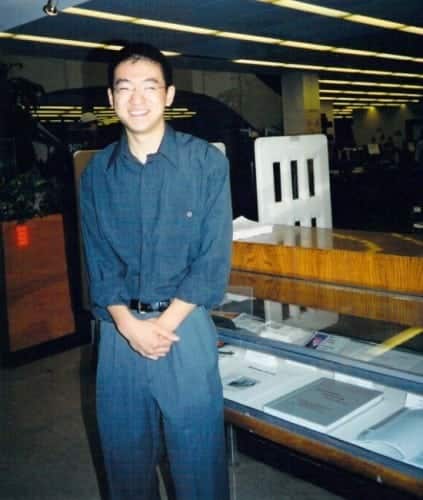
Yarik’s great-grandparents emigrated from Korea to Russia before there were borders between the two countries in the mid-1800s. When the lines were drawn, they found themselves in a position to either return to their homeland and leave their entire livelihood behind, or adapt Christianity as their formal religion, take a Russian name, and become part of the Russian empire. So Yarik grew up in Russia in an area with a large Korean population.
This familial diaspora would hint at Yarik’s move to the United States.
“My father did business with a U.S. nonprofit,” Yarik said. “He just happened to mention that his youngest son had just graduated from high school and would love to come to the U.S. if possible.”
Yarik’s dad saw an opportunity that many immigrant families have tried over the years to achieve, providing more opportunities in education and experience to their next of kin. There were several hurdles, though through a few connections, he was granted a student visa from the U.S. Embassy and arrived in 1999. Due to the U.S.’s complex immigration system, 13 years would elapse before he would be able to return home and see his family in Russia. He shared that when he was finally able to visit his family, he almost did not recognize them.
During his first few tough years in the United States, Yarik learned the value of community and connection. Although he came to the country without any family, language skills, resources, or initial support, he found a home in a Russian neighborhood with a surrogate family and attended classes at CUNY. After receiving a nearly complete scholarship to Adelphi University in Long Island, Yarik embarked on the academic path that would lead him to the accounting profession and graduated summa cum laude with finance and accounting degrees in 2004. 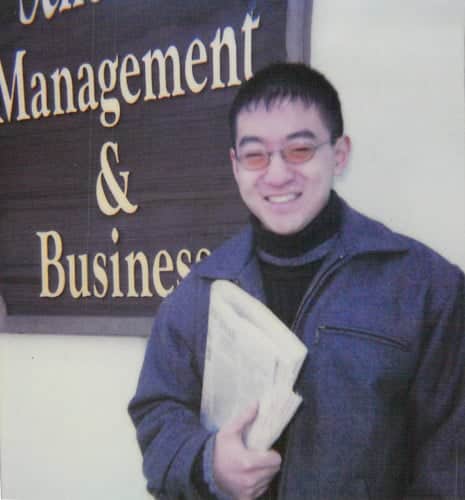
In 15 years, Yarik moved his way up from an intern to a partner at Schwartz and Company. When the firm merged with MGO in 2020, he was happy to see the broad community the firm provided. Now a U.S. citizen, he credits his success to the power of community and connection.
“Find your coach, find your mentor, and be active in finding them,” Yarik said. “Truly connecting with someone on a personal level, whether you’re an intern or a partner, accelerates you both professionally and personally.”
As for diversity in the workplace, Yarik believes that performance increases exponentially when people are authentically themselves.
“Often we create our own invisible walls,” he said. “But truly, connection is our greatest asset.”
Things were made official in 1975 when the United Nations began celebrating the day. The first theme adopted in 1996 was “Celebrating the Past, Planning for the Future.”
Purple, green, and white are the colors of IWD, according to the International Women’s Day website. Purple signifies justice and dignity, green symbolizes hope, and white represents purity, albeit a controversial concept. The colors originated from the Women’s Social and Political Union (WSPU) in the UK in 1908. The UN announced the theme for 2022: Gender equality today for a sustainable tomorrow.
Stay tuned for spotlights featuring some of the women of MGO!
]]>LGBTQ+ Pride is more than a month, it’s a movement—a movement that recognizes the resilience and determination of the many individuals who have fought or are fighting to live freely and authentically. For MGO, it offers an opportunity to show support and raise awareness around the issues that the LGBTQ+ community currently faces. It gives the community a chance to promote education and understanding but also celebration—embracing the differences that make us all unique. During Pride Month, it’s common to see parades, street parties, poetry readings, festivals, and more on calendars all around the globe.
The observance of Pride indicates growing acceptance and individuality. Although certain attitudes, prejudices, and injustices remain today, we have come a long way, and by continuing in this decades-long tradition, we continue to raise awareness and encourage inclusiveness.
The Evolution and History of Pride Month and Why it is Important Today
For decades, Pride Month has been celebrated in June across the United States and it includes festivals, parades, and events held to honor the wide spectrum of LGBTQ voices and experiences, as well as draw attention to the issues the community faces today. It’s only recently become official: in 1999, President Bill Clinton declared June as Gay & Lesbian Pride Month; in 2009, President Barack Obama touted June LGBT Pride Month; and on June 1, 2021, President Joe Biden officially announced that June would henceforth be known as Pride Month.
But how did this month-long celebration start? And why June? It began with the Stonewall Uprising in New York City on June 28, 1969. After police invaded a gay club in Greenwich Village, riots and protests—some which lasted over six days—soon followed throughout the city. Protesters were angered at the intolerance they faced—because at that time, “masquerading” as a member of the opposite sex was considered a crime in the city. Most of the people who frequented Stonewall were drag queens or gay men of color.
Two of these patrons and protestors were transgender activists Marsha P. Johnson and Sylvia Riviera, who both played a hand in the riots. They are known today as pioneers for transgender rights. The Stonewall Inn was declared a historic landmark by the City of New York and a national monument by President Obama. Last year, it was announced that a monument commemorating Johnson and Riviera’s efforts will be built in Greenwich Village. The Stonewall Riots truly helped to turn the tides by sparking a shift and increase in LGBTQ+ activism, ultimately opening the public’s eyes to the persecution the community faced for being open about their sexual orientation and true identities. Activist Brenda Howard, known as “The Mother of Pride,” is credited with starting the unofficial Pride Month by organizing Gay Pride Week and the Christopher Street Liberation Day Parade a year after the Stonewall Riots.
As more Americans get vaccinated and COVID-19 restrictions are loosened, 2021’s Pride Month celebrations are well underway. For example, Washington D.C. is hosting a mobile caravan, New York Pride will host both in-person and virtual celebrations, and the Atlanta Pride Run will welcome runners.
As an ally, you can show support by shopping at retail stores giving back to nonprofit organizations that support LGBTQ+ and other DEI initiatives. Some of these stores include Adidas, Apple, Lego, Olay, PetSmart, and Reebok. Visiting local sites where LGBTQ+ history was made, like the Pulse Interim Memorial in Orlando, the Henry Gerber House in Chicago, and the Stonewall National Monument in New York, is another way to get into the spirit. For those MGO employees who live on the West Coast, check out places like the Griffith Park Merry-Go-Round in Los Angeles, which was the meeting point for “gay-in” protests organized to foster acceptance in the late 60s or Pink Triangle Park and Memorial in San Francisco, which is the only freestanding monument in the U.S. to honor the thousands of persecuted LGBTQ+ prisoners in Nazi Germany during the Holocaust. Finally, actively stand against negative attitudes and acts of discriminations that still exist today and support those in your circle who open up to you about their true selves.
Why Rainbow? Dive into the History of the Pride Flag.
The rainbow flag, now widely known as the symbol of Pride, represents a bold, visual representation of the movement with every color of the flag having a special meaning. In a way, its many colors stand for the many diverse identities within the LGBTQ+ community—promoting the idea that everyone should be seen and recognized for who they are.
The original flag was created by artist Gilbert Baker in 1978 at the urging of openly gay politician Harvey Milk. As he later said, “Our job as gay people was to come out, to be visible, to live in the truth, as I say, to get out of the lie. A flag really fit that mission, because that’s a way of proclaiming your visibility or saying, ‘This is who I am!’” However, it was not until 1994 that the rainbow flag was officially established as the symbol for LGBTQ+ pride—it was then that Baker made a mile-long version to celebrate the 25th anniversary of the Stonewall Riots.
But there is more than just one Pride flag. In 2017, the City of Philadelphia redesigned the flag to include brown and black to further promote diversity and inclusion and, the city said, to “honor the lives of our Black and brown LGBTQ siblings.” There is also a Lesbian flag that features shades of orange, purple and pink. The trans flag incorporates light blue and light pink, the colors traditionally given to baby girls and boys at birth, and white, which represents intersex, or a neutral gender.
How Corporations Are Celebrating Pride Month
By now, we are all familiar with QR codes: those little pixelated squares we have been scanning at restaurants since they started opening back up to view the menu. This month, however, some businesses are taking the practice of QR codes a little further: to celebrate Pride.
H&M developed a “web-based scanner app” that will allow users to open the app and scan anything rainbow colored. You’ll land on a web page with powerful stories about LGBTQ+ H&M employees and influencers.
Skittles not only launched a completely gray bag full of completely gray Skittles—reminding us all that there’s nothing more important than the rainbow! —but it also partnered with activist Blair Imani to roll out “QueeR Codes,” which allows users to scan codes on murals commissioned by LGBTQ+ artists around the U.S. to learn about the artists’ stories.
Macy’s painted rainbow heart decorated QR codes on the sidewalk outside of its Herald Square, NYC, store. When scanned, they reveal a custom Macy’s Pride + Joy (the department store’s larger Pride initiative) filter on Instagram.
Many other corporations, from Uber to Zillow to Bank of America, have changed their logos to include rainbow colors for Pride Month to stand in solidarity with LGBTQ+ community and further promote inclusivity and equality in the workplace.