- Agents and managers can help globally earning clients like professional athletes, musical artists, and entertainers strategically manage finances and taxes across borders to maximize earnings.
- For U.S. citizens and residents earning money abroad, key areas for advisors to address include endorsement deals, royalties, foreign properties, foreign tax returns, and tax structuring that considers foreign investments.
- For foreign (non-resident) athletes, artists, and entertainers performing in the U.S., considerations include but are not limited to U.S. taxable income, withholding rules, tax status, Central Withholding Agreements (CWA), and tax treaties.
~
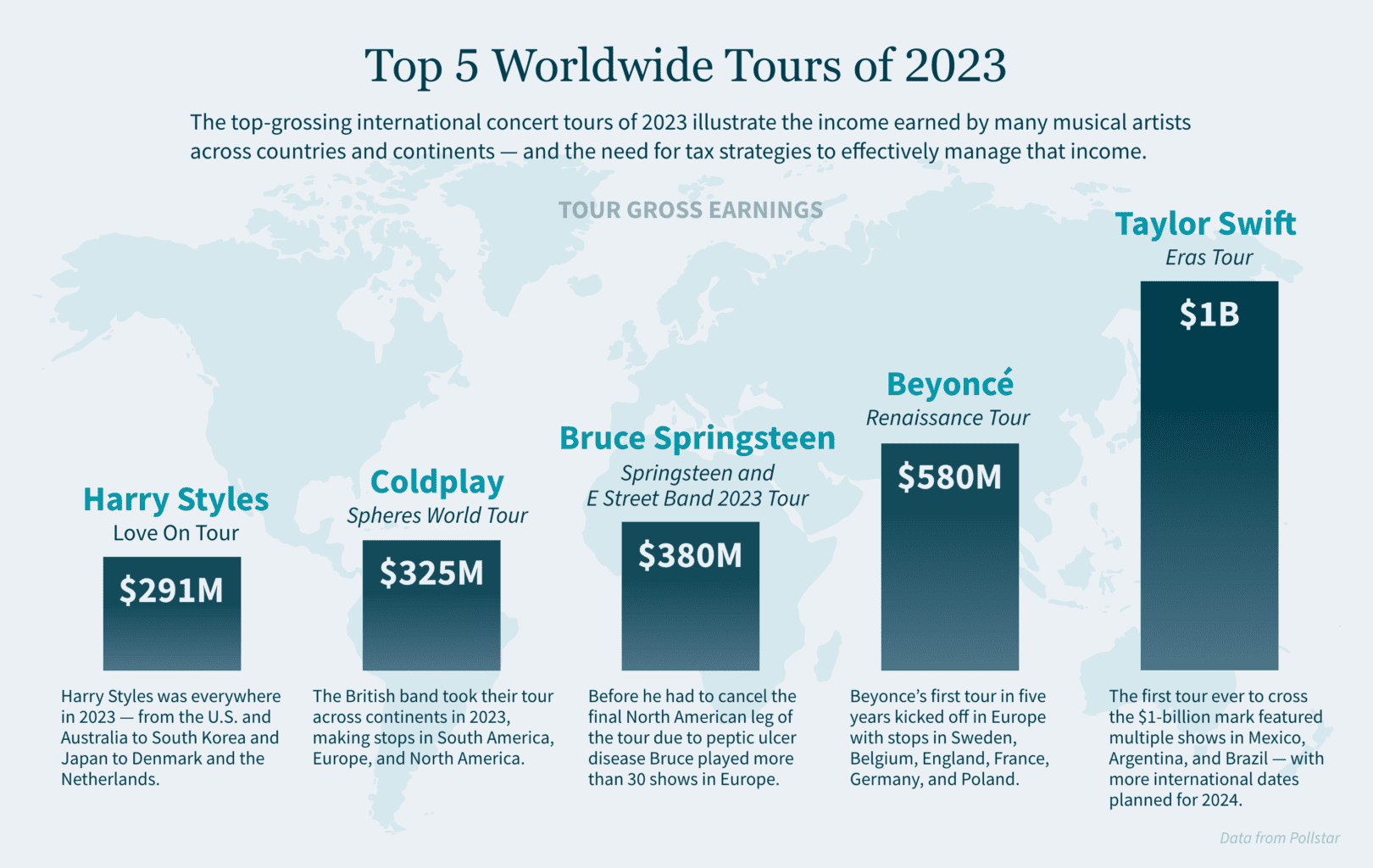
As an agent or manager for athletes, artists, and entertainers, many of your clients likely earn income across borders as they perform worldwide. Strategically managing their finances and taxes is crucial to maximize earnings. Proper planning can help reduce tax burdens and avoid double taxation across jurisdictions. This allows your clients to focus on their careers while you may finesse your assistance to them in optimizing their income with guidance from tax professionals.
Understanding key tax considerations can enable you to put frameworks in place to mitigate your clients’ liabilities. For clients who are citizens or residents of the United States earning money abroad, all worldwide income must be reported to the IRS. However, foreign countries also tax income earned by non-residents. Assessing relevant tax treaties and structuring contracts in an appropriate manner can lead to more advantageous tax treatment.
When your clients have income from various sources both from inside and outside the United States, proactive tax planning is key. Common international income types to consider include:
- Salaries from foreign leagues and tournaments
- Performance fees from concerts and festivals
- Royalties
- Endorsements and sponsorships
- Bonuses and prizes from international tournaments
- Merchandise sales
- Other income earned while playing or performing overseas
How these income types are classified and sourced impacts tax liabilities. Consulting tax professionals before your clients sign any deals allows for upfront planning that can keep more money in your clients’ pockets.
5 Key Considerations for U.S.-Based Athletes, Artists, and Entertainers Earning Income Abroad
If you are an advisor to musical artists, professional athletes, film actors, or other performers who are U.S. citizens, residents, or green card holders with foreign income sources, here are five important areas to address:
- Endorsement Deals – How will the construction of a contract impact tax treatment abroad? Will the income be considered U.S. or foreign sourced? What are some ways to proactively plan for potential tax savings?
- Royalties – Can royalties be classified differently if content is published while clients are abroad? How are royalties affected by collaborations with international artists? Is it considered U.S. income if royalties are received while playing or performing abroad?
- Foreign Properties – What are the tax rules surrounding your clients purchasing or renting homes abroad (rules may vary by country)? Did you know that foreign rental income may need to be disclosed on a U.S. tax return? How do investments in foreign countries get reported and taxed?
- Foreign Tax Returns – When is return filing required for extended stays abroad? Can foreign taxes be credited (and is the credit dollar-for-dollar)? What should be expected for payments received as a contractor versus as an employee? Which expenses are deductible in each country? For example, are agent fees, travel expenses, and entertainment deductible?
- Foreign Tax Structuring – Is it better to withhold taxes on gross revenues or after deductible expenses? How do local, state, and regional (provincial, cantonal, district, county) taxes factor in?
With these areas addressed upfront, you can maximize income and minimize overall tax burdens for your clients as opportunities arise.
5 Top Considerations for Foreign Domiciled Athletes, Artists, and Entertainers Performing or Playing in the U.S.
If you are an advisor to athlete, artist, and entertainer clients who are not residents or citizens of the U.S. but earn income in this country, areas that could have an impact on your clients’ taxes include (but are not limited to):
- U.S. Taxable Income – Is U.S.-sourced income taxable? What types of income may this include? Is there a requirement to file a U.S. federal income tax return? Is there an income threshold that must be met?
- Withholding Rules – What are the withholding rules surrounding payments to foreign athletes, artists, and entertainers?
- U.S. Tax Status – How is U.S. tax status determined — residency for income tax and domicile for transfer tax? How is taxation affected with or without a Social Security Number (SSN) or Individual Taxpayer Identification Number (ITIN)?
- Central Withholding Agreements (CWAs) – A CWA is a tool that can help entertainers and athletes who don’t live in the U.S. by having U.S. income tax withheld based on the non-resident’s income. Is a CWA beneficial for the individual’s situation?
- Tax Treaties – Does the individual’s home country have a tax treaty with the U.S.? How does it impact tax liabilities?
Evaluating options surrounding tax statuses, withholding approaches, and applicable treaties can mitigate liabilities and optimize tax treatment for your foreign clients.
Work with Tax Professionals to Help Your Clients Maximize Global Income
As an agent or manager navigating global income for your clients, working with experienced tax professionals is key. Advisors can assess your clients’ situations across jurisdictions to put frameworks in place reducing liabilities and avoiding double taxation. With the right global tax strategy tailored to each client, you can position them to pursue worldwide career opportunities with maximum income and minimum taxes.
Need help navigating the world of international tax for athletes, artists, and entertainers? We have experienced professionals dedicated to both international tax and entertainment, sports, and media (ESM) ready to answer all your questions. Reach out to our International Tax Team today.
]]>- Name, image, and likeness (NIL) deals offer athletes exciting opportunities, but also potential pitfalls if not approached strategically.
- Athletes should educate themselves on taxes, carefully review contracts, and budget with long-term security in mind.
- With guidance on financial obligations, agreements, and smart money management, athletes can maximize NIL benefits while safeguarding their futures.
~
You are a talented young athlete with a growing public profile. You’ve just been offered a Name, Image, and Likeness (NIL) deal, an opportunity that can put some extra money in your pocket or even, in some cases, make a more profound impact on your financial life. It’s an exhilarating time, but it’s also crucial to approach this new chapter with the right knowledge and mindset.
Whether you’re a college or high-school athlete, or the trusted advisor to a young athlete, here are the three most critical actions you should take to avoid common financial pitfalls associated with NIL deals.
1. Recognize Your Tax Obligation
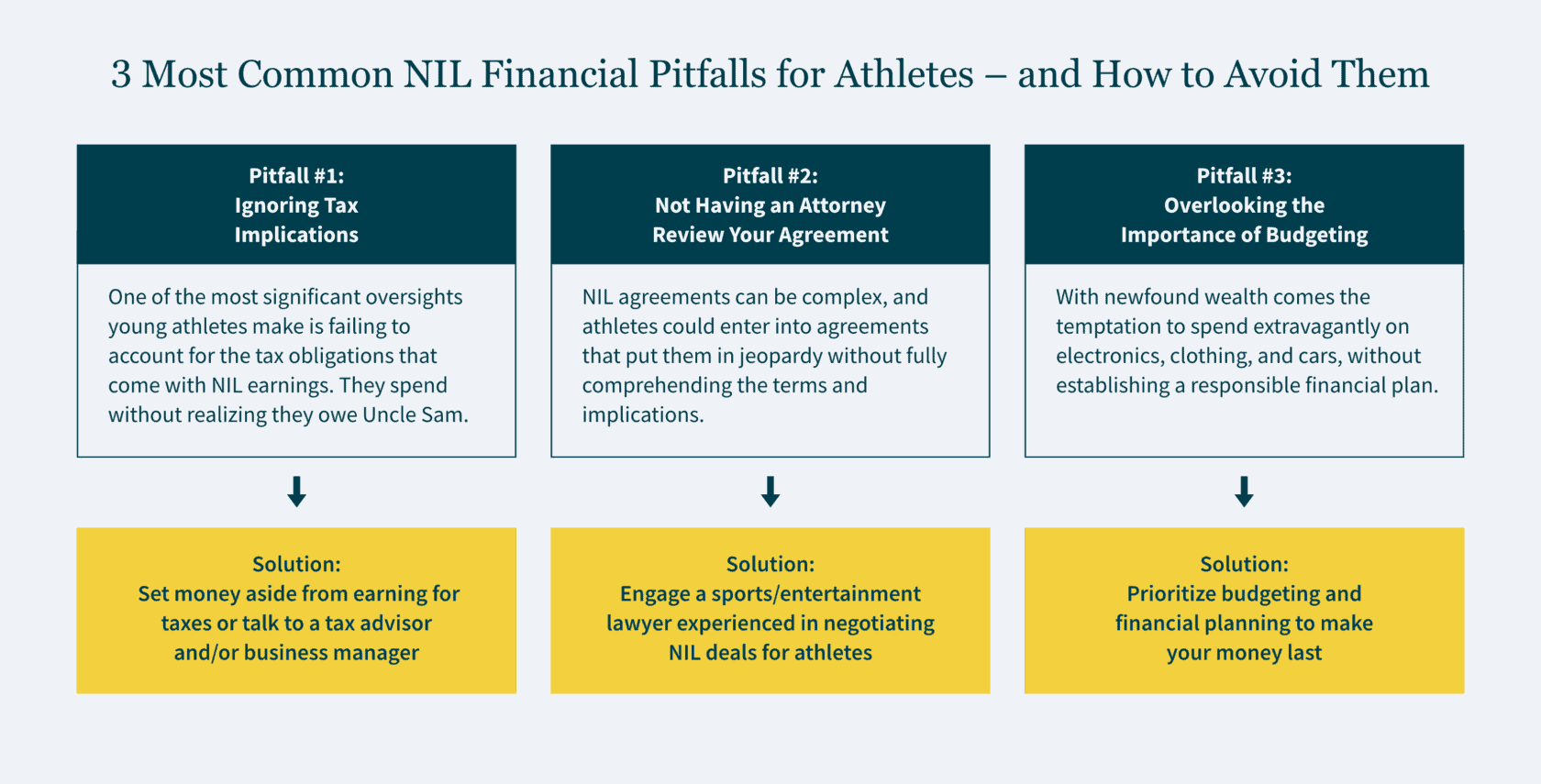
One of the first hurdles you’ll encounter in the world of NIL deals is taxes. It’s essential to understand that the money you earn from these deals is subject to taxation. Many young athletes overlook this, often because they’ve never had to deal with taxes before.
To avoid potential financial trouble down the road, consider these steps:
- Educate Yourself: Young athletes receiving payments from NIL deals are responsible for paying taxes on that income just like professional athletes. Take the time to learn about taxes, especially how they apply to your earnings. Understanding the basics of taxation will empower you to make informed decisions.
- Consult a Tax Professional: Before signing any NIL agreement, consult with an experienced accountant, tax advisor, or business manager. They can help you calculate your tax obligations, identify potential deductions, and develop a tax strategy tailored to your situation. Along with ensuring any federal, state, and local taxes you owe are paid on time (avoiding penalties), a tax professional can also help you navigate more complex situations – such as earning income across multiple states.
- Practice Smart Spending: Resist the urge to splurge on electronics, clothes, or cars as soon as the money starts rolling in. Create a budget that considers your future tax payments, living expenses, and financial goals. Staying disciplined with your spending is key to long-term financial success.
2. Execute Agreements Cautiously
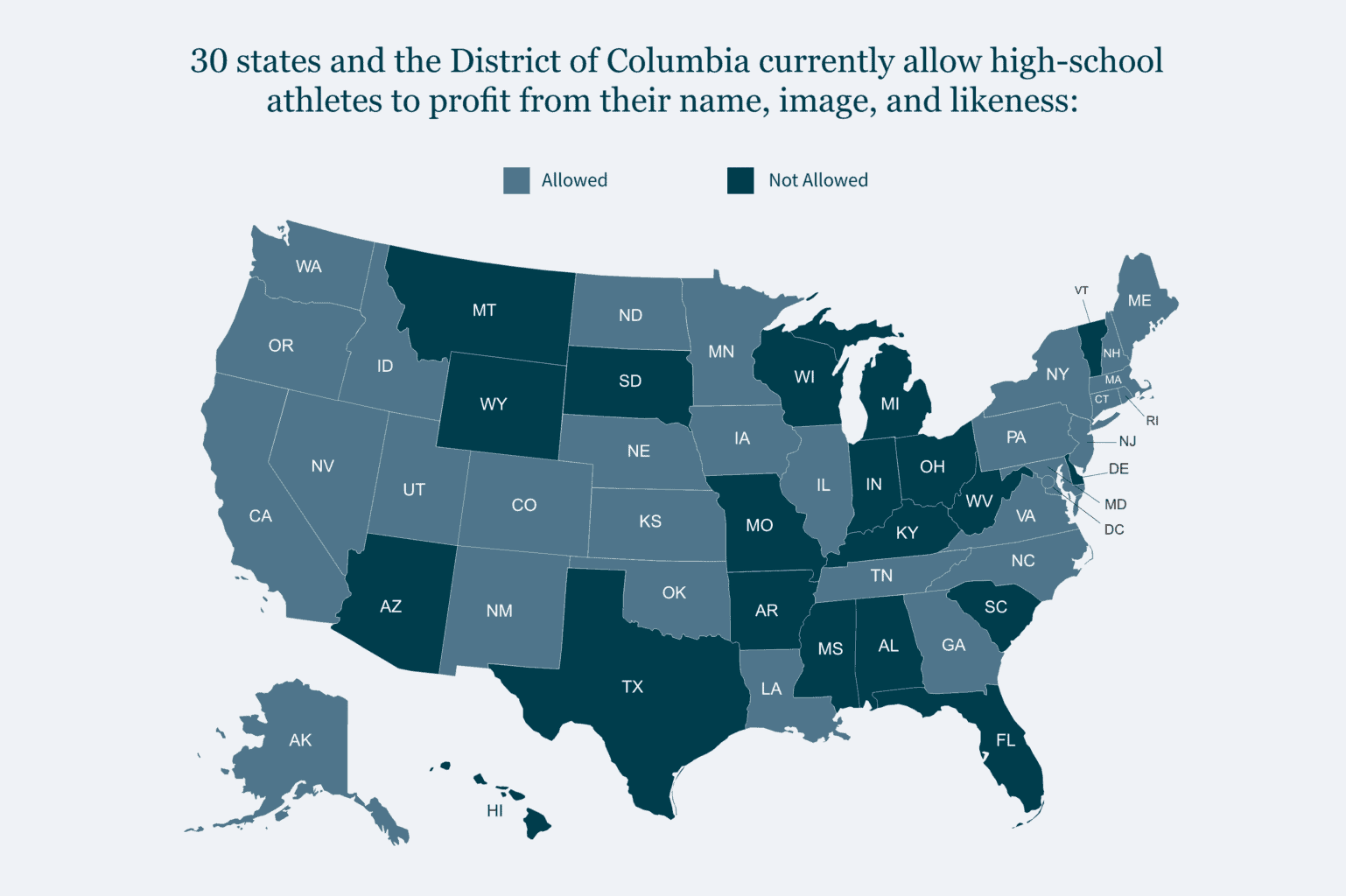
Navigating NIL deals can be tricky. There are various state laws and school policies to consider, along with a number of legal “gotchas” to avoid. Here’s how you can safeguard your interests:
- Seek Legal Advice: Before signing any NIL agreement, engage a lawyer with experience negotiating NIL and brand endorsements for athletes. An attorney with expertise in sports contracts can help you navigate the important terms in an NIL deal, such as money, exclusivity, length of the agreement, how the brand can use your name, image, and likeness, and an athlete’s delivery requirements. An experienced attorney will help you spot potential pitfalls and ensure the agreement aligns with your long-term goals.
- Beware of “Standard” or Simplistic Agreements: When someone refers to a contract as “standard” or provides an overly simplified agreement, that should throw up a red flag. All it takes is the slightest language in your agreement to give a company unfettered rights to use your name, likeness and image in ways you never intended.
- Follow Regulations: An experienced advisor will help you navigate specific laws and policies set by your state, school, and the NCAA regarding NIL deals. For example, you cannot share photos or videos in your team uniform with logos from other brands without first getting permission from your school or the brands.
3. Budget Wisely for the Long Term
While newfound wealth can be exhilarating, it’s crucial to manage your finances wisely:
- Prioritize Needs Over Wants: When it comes to spending, prioritize essential needs over extravagant wants. Understand this financial windfall may be a one-time occurrence, so focus on building a secure future rather than indulging in immediate gratification.
- Future-Proof Your Earnings: Instead of assuming this is a continuous stream of income, treat each deal as if it were your last. Create a budget that accounts for potential future earnings and uncertainties, ensuring you’re prepared for any scenario.
- Explore Tax Mitigation Strategies: Consider tax mitigation strategies, such as retirement planning and deferral opportunities, to minimize your tax burden. Consulting a financial advisor can help you explore these options.
Make the Most of Your NIL Opportunities
The legalization of NIL in college and high school sports represents an exciting shift for young athletes. It can offer game-changing money, enabling you to take care of your financial needs, along with building your brand for future growth. But with great success also comes great responsibility. Even professional athletes who’ve reached the highest pinnacles of their respective sports can end up without the financial resources they need if they don’t plan ahead.
The good news is by recognizing the potential pitfalls and seeking professional guidance early in your NIL journey, you can better position yourself for long-term financial success. Remember, it’s not just about profiting from your name, image, and likeness today, but also securing your financial future for tomorrow.
How We Can Help:
Our Entertainment, Sports, and Media practice understands the unique challenges athletes face at all stages of their financial journey. Whether you need assistance with tax planning, contract negotiations, or financial strategy, we’re here to guide you toward a successful future in the world of sports and NIL deals.
This article was co-authored by Leron E. Rogers, Partner at Fox Rothschild LLP.
]]>The warning signs that an athlete’s wealth is about to take a turn for the worse
are easy to spot – because it happens in predictable ways. Lack of experience
and betrayals of trust are enough to take down all but the strongest financial
foundations. The biggest keys are to understand it can happen to anyone, and
take the simple steps to avoid these issues.
1. The Entourage
Friends from the neighborhood can latch onto the athlete, and live the celebrity life while being a persistent drain on finances and a source of bad ideas. The athlete has promised to “take them with – out of the neighborhood/poverty,” but forgets that before they can help anyone else, they need to put the oxygen mask on first.
What to do instead: You can turn this potential risk into an asset. Take your crew out of the neighborhood, but set them up to thrive. Whether through responsible small business loans, or career training, you can rise up together.
2. The Gatekeeper
Too often a long-time friend or family member, with no financial experience or knowledge, becomes ‘The Gatekeeper’ for the athlete. This person makes bad business decisions and controls access to the athlete, ensuring no one can expose the negative consequences on the athlete’s finances.
What to do instead: You must take a careful look at who you’ve put in charge and consider whether their motivations are right, and perhaps more importantly, whether they have the skills needed to make these decisions. If one or both is lacking, go the route of #1 and help them get there, or let them go and find someone you can trust.
3. The Tantrum
When finally rewarded for the work and discipline required to become a pro, many athletes go through a phase of feeling that they deserve anything and everything. When told not to buy luxury items such as jewelry or cars, the response is – “who the hell are you to tell me what I can or cannot buy!?” Increasingly disastrous financial decisions inevitably follow.
What to do instead: This one is on you. No one will ever truly understand what you’ve endured to achieve success, but you also have to keep one foot on the ground and understand how quickly you could lose everything you’ve worked for. The best path forward is to implement a budget with room to enjoy what you’ve earned, but also has controls in place to ensure you’re building an unshakeable foundation for the future.
4. The YES Men
As soon as someone in the athlete’s camp gets fired for not agreeing with bad decisions, the professionals hired to protect their client, like the agent, business manager or lawyer, are likely to mitigate any conflict with the athlete to avoid getting fired – becoming YES Men. They would rather ride out the financial storm that is coming then tell the athlete only what they need to hear. As soon as there are only YES men around, the end is almost certainly near.
What to do instead: You must understand how getting different points of view on financial matters helps avoid financial hazards. Get into the habit of always asking your team: “What could go wrong with this financial move?” The final decision is always yours, but there is tremendous value in advisors who feel confident sharing financial knowledge and experience, even when you don’t want to hear what you need to hear.
5. Financial Myopia
Athletes can have a defective vision of their financial future. The average career span in the NFL is 3.3 years, the NBA is 4.5 years, the MLB is 5.6 years, and the NHL is 5 years. Sure they may earn a lot of money, but after paying agent’s fees, taxes, and for a luxury lifestyle, there isn’t much left to support the rest of their non-playing years. They may think that they can pull off another miracle in overcoming all odds to maintain their lavish lifestyle, but the most common result is a broke athlete.
What to do instead: Budgeting and planning are the keys here. Just remember it isn’t a “one or the other” situation. With the right mindset and approach, you can still live (relatively) large, while putting away enough to secure a future for yourself and your family. It just takes some self-control and a willingness to make the right decisions.
Final Thoughts
So many athletes come into a level of money at a young age that no one is truly prepared to handle. Athletes just have to remember that true baller status comes when athletes can live like a king for a lifetime, not just for a couple years. If an athlete can build a trusted team, establish a plan, and follow it through, a comfortable lifestyle is highly attainable.
by Louis Barajas, MBA, EA, CFP
Partner and Chief Strategy Officer at MGO Private Wealth
Advisor to The Future Game
The financial perils celebrities face in Hollywood
A professional athlete or a top tier individual in entertainment should look at their expanded wealth and the management of that wealth the same way a mid-sized company would. The person earning the income is the CEO of the business and their name is the brand. They need a CFO to manage finances who is supported by a team of experts who are the best in their fields of wealth management, diversified investing, and financial planning. This team then enables the talent to get the best use out of their wealth while still making provisions for a comfortable future.
A good partnership between a high earning professional and a financial team can yield endless results and allow earners to live comfortably now and long into the future when considering retirement. Trust is the key to a successful working relationship between a high-income client and their financial team. With that trust established; the future of an individual and their family will be assured with strategy, planning, and more than just a bit of market savvy.
The first step in working with a professional financial team is to take ownership of financial awareness and education. It’s important that the earner takes time whether over the phone, remotely through video conference, or when possible in person; to sit and talk to their financial professionals. This will help them understand how and why their money is being managed the way it is.
A financial team needs to be allowed to act as guardians of wealth
High-earning talent must allow their financial team to act as guardians and keepers of their money. In the worlds of sports and entertainment celebrity, very few things are ever denied top-earning talent, and quite often they are not acquainted with the word “no.”
This is where financial teams step in to not only shield talent from financial predators and bad investments, but to also protect the earner’s money from themselves by helping curb extravagant spending and off-the-wall purchases. A good financial professional team is the best line of defense against money disappearing with no return.
Establish current and future goals for the life you want
A series of goals must be set by the earner and their financial professionals to properly plan for the future. Where do you want to be when you retire? What kind of life do you want to have? With the money you have coming in, what sort of plans can you make for yourself and your family? It’s important that individuals set realistic goals that are guided by their financial team, and that they maintain solid credit through their more lucrative years so they have an excellent history to build from.
Work to establish a series of sound and profitable investments
Talent can work with their financial team to establish investments that will earn returns and dividends that they can draw upon once they are no longer working. Municipal Bonds and ETFs in efficient markets are examples of smart investments. There are a multitude of options available, and if your financial team is savvy; they can advise you in the world of alternative investments like casinos, restaurants, hotels, and newer
markets like cannabis.
Get the right insurance for your career and risk profile
The financial team must work to ensure that talent has adequate insurance. Athletes take risks with their bodies all the time, so it is important that a player maintains the correct type of insurance that will cover them if they are injured and are unable to return to playing for a season. Or in a worst case scenario, they are forced into early retirement by an injury. The same can is true for actors, directors, and professionals in the world of entertainment. On-set accidents do happen, and if a person is unable to work in their chosen field; their earnings drop to next to nothing.
There is an energy and synergy to money
There is a synergy and energy to the exchange of money. Money is like an electrical current and a flow must be maintained at all times for wealth to increase in size. There needs to be a give and receive in place when balancing an individuals’ investments and wealth, and there is always the value of giving vs. receiving to consider. This journey to finding a balance with a financial team and a true vision of what a person wants to achieve with their wealth and their life is a much broader topic; which we’ll be discussing soon enough. So, just keep your eyes open for further editorials in this ongoing series!
]]>